The purpose of these frequently asked questions is to provide brief answers to frequently asked questions, as well as an introduction to the Byzantine Catholic Church and our beliefs. The FAQ’s below are divided into four sections on the Church, Liturgy, Theology & Sacraments, and Spirituality. Each question is a drop-down box – simply click on the question and get the answers you’re looking for. Some questions, and subsequent questions that are typically asked; most of these are in the explanation(s) of the Sacraments.
**It is not meant to be exhaustive, so we encourage you to come to liturgy and connect with our members and leaders to ask any more detailed questions. After all, a conversation with a person is always more fruitful than reading words on a website!
One Holy Catholic and Apostolic Church
What does a Byzantine Catholic believe?
“I believe in one God, the Father Almighty, Creator of heaven and earth, of all things visible and invisible; and in one Lord Jesus Christ, Son of God, the only begotten, born of the Father before all ages. Light from Light, true God from true God, begotten, not made, one in essence with the Father; through whom all things were made. For us and for our salvation, he came down from heaven and was incarnate of the Holy Spirit and the Virgin Mary, and became man. He was crucified for us under Pontius Pilate, and suffered and was buried. He rose on the third day according to the scriptures. He ascended into heaven and is seated at the right hand of the Father, and he is coming again in glory to judge the living and the dead, and his kingdom will have no end. And in the Holy Spirit, the Lord, the Creator of Life, who proceeds from the Father. Together with the Father and the Son he is worshipped and glorified; he spoke through the prophets. In one, holy, catholic, and apostolic Church. I profess one baptism for the remission of sins. I expect the resurrection of the dead and the life of the world to come. Amen.”
What are “Byzantine Catholics?” are you Roman Catholic or Eastern Orthodox?
We are Eastern Christians who share the same traditions, patrimony, and history with the Eastern Orthodox, but are in communion with the Roman Catholic Church. In essence, we worship as the Eastern Churches did in the first millennium – in communion with the Sea of St. Peter (the Pope and the Roman Bishops). Whereas, the Eastern Orthodox and Oriental Orthodox are not. We are not Roman Catholic as we are not under of the Latin Ritual Church. Rather, we are self-governing (Sui Iuris) and are referred to as whichever Eastern Ritual Church we belong to. The Ruthenian Greek Catholic Church in the United States, which is the eastern ritual Church this outreach belongs to, is referred to as the Byzantine Catholic Church. It is most appropriate to refer to a member as “Greek Catholic,” “Byzantine Catholic,” or “Ruthenian.”
Can I attend if I’m not Catholic?
Yes! Please come and worship with us and introduce yourself. We’re a pretty low-key bunch that loves talking about the faith or having a simple and casual conversation. Hospitality and community time are a charism of the Eastern Church, so please don’t leave right after the liturgy is over. You are most welcome to stay and ask questions or hang out!
Can I receive Communion (Eucharist) at your church?
Anyone who is Catholic in communion with the Pope of Rome, cleared of conscience, and in a state of grace may receive the Eucharist at any of the 24 Catholic Ritual Churches. Eastern Orthodox Christians may receive Holy Communion if they wish. If you are not Catholic or Orthodox, we ask that you refrain from receiving the Eucharist (Holy Communion). You may ask, “why”? First, the Eucharist is the body, blood, soul, and divinity of Jesus Christ. We must be properly prepared to receive it (1 Cor. 11:26-29). A non-Catholic who does not believe in the Real Presence would not be properly prepared to receive the Eucharist as part of our profession of faith. Second: Communion. The word implies a unity and a oneness, and the answer becomes clear by this implication. Catholics believe that the celebration and partaking of the Eucharist (as a communal “thanksgiving” meal) is a sign of the reality of the ecclesial oneness of faith, life, and worship of the One Mediator and High Priest Jesus Christ. In essence, it would be improper for non-Catholics to receive what they do not (yet!) believe in and partake in a communion they are not (yet!) a part of. If you are comfortable, you may join the communion line and ask for a blessing from the cleric providing communion. He will place the chalice on your head and provide the blessing.
We encourage you to ask someone how you can begin your journey into full communion in the Catholic Church! If you believe the Catholic Church is the One, Holy, Catholic, and Apostolic Church, but are not yet Catholic, please talk to the pastor or one of the deacons and we can begin the process of becoming Byzantine Catholic!
How do I (practically) receive Communion in Divine Liturgy?
If you’re a Catholic who is currently disposed to consume Jesus in the Eucharist, during communion you go up to the priest, say your name (if he doesn’t know it already), cross your arms over your chest, tilt your head back, and open your mouth (like a baby bird). The priest will use a spoon to give you the Eucharist (body and blood together) to eat. Do not kneel (kneeling is a posture of penance in the East, not adoration). If you are not going to receive the Eucharist, you may still come forward to receive a blessing. Simply ask for a blessing and the cleric will place the chalice on your head and provide the blessing.
Where can I learn more about the Byzantine Catholic Church?
There are many different sources, often spanning Catholic and Orthodox sources. The best place to start is on this FAQ coupled with information linked in our “traditions” tab. Additional ways to learn about the Church can be found in these Magisterial or Synodal publications: Christ Our Pascha – Byzantine Catechism (Catechism of the Ukrainian Catholic Church), Orientalium Dignitas (Pope Leo XIII, 1894), Orientalis Ecclesiae (Pope Pius XII, 1944), Orientalium Ecclesiarum (Vatican II, Pope Paul VI, 1964), Orientale Lumen (Pope John Paul II, 1995), Ut Unum Sint (Pope John Paul II, 1995) and many more!

Liturgical Life & Practice
When do you have “Mass?” And what is this thing you call “Divine Liturgy?”
Byzantine Catholics do not generally use the word “Mass” to refer to our Eucharistic Liturgy like Roman Catholics do. In the Byzantine Rites the Eucharistic Liturgy is called the “Divine Liturgy.” The origin of the term “Mass” is proper only to the development of the Western Catholic (e.g.: Roman/Latin) Church. It comes from the Latin missa, originating from the It missa est, or the sending forth one hears from the deacon at the end of Mass. Although there is a sending-forth at the end of Divine Liturgy, notably when the command is given to arise, its origin is distinct from that of the West. Therefore, “Mass” is not a term applicable to the Eastern Eucharistic Liturgy (i.e.: it is not an interchangeable term). However, similar to the Mass, the Divine Liturgy has two public parts, known as the Liturgy of the Catechumenate (or Liturgy of the Word, which begins when the deacon commands “It is time for the Lord to act!”) and Liturgy of the Faithful (or Liturgy of the Eucharist). The Byzantine Liturgy does have a private Liturgy called the Liturgy of Preparation, which takes place before the public start of the Divine Liturgy.
Why is there no kneeling during the Divine Liturgy?
We keep the ancient tradition of standing during the Divine liturgy from Canon 20 of the First Ecumenical Council of Nicaea, which states that on Sundays and during the Paschal season prayers should be said standing. Also, in the East historically, kneeling was considered a penitential act rather than an act of reverence or adoration (as is the collective understanding in the contemporary Latin Church). Since Sundays are not penitential days, we do not kneel during Divine Liturgy on these days for this reason. During the Great Fast (Lent), there are occasions of kneeling and full prostrations.
What is the bread set out after communion?
That is called the Antidoron. It is simply blessed bread which any attendee may receive regardless of canonical status or denomination.
Why do you make the sign of the cross?
We know that Christians have made the sign of the cross since the early church. Tertullian (+ AD 220) described the practice as being something that was already an old practice while he was alive. The sign of the cross is a prayer, a creed, and a reminder of salvation through active faith in Christ.
Why do you cross yourself so much in the East?
The Sign of the Cross is a prayer all on its own that Christians should pray regularly even outside of Divine Liturgy. It is a healthy reminder of our shared Trinitarian life. During Divine Liturgy, we especially use the Sign of the Cross whenever the Trinity is invoked.
Why do you cross yourself “backwards” in the East?
We make the sign of the cross by touching our forehead, belly, right shoulder, then left shoulder. This will look backwards to Roman Catholics, but it is the original way both Romans and Byzantines made the sign of the cross in the early church. We also have a specific way use your fingers/hand when making the sign. Your thumb, pointer, and middle fingers come together; the three fingers together represent the Trinity. The pinky and ring finger get tucked into the palm; these two fingers represent the fully human and fully divine nature of Jesus Christ (Hypostatic Union).
Why don’t you use instruments?
The early church fathers expressed that musical instruments could distract from the prayer that we say as we sing during our liturgy. For this reason, early church fathers tended to be against using musical instruments during the liturgy.
Why do you have so many icons in your church?
During the Divine Liturgy, we experience the joining of time and space and of heaven and Earth. This means that all the angels and saints are celebrating with us during the Divine Liturgy, even though we do not see them. To make these “cloud of witnesses” (Heb 12:1-2) present to our own created senses, we have icons of saints to show us this truth of the presence of angels and saints during the Divine Liturgy. Perhaps the most notable iconography in the church is the Iconostasis, or “Icon Screen” between the sanctuary and nave. Many might believe this is a separation between the sanctuary and the people; however, it is meant to be seen positively as a doorway, or a visual mediation, inviting the people of God into the mystery of the heavenly banquet. A typical Byzantine church will be filled with icons. Currently, we are growing and raising money to buy our own church, so the iconography is limited.
How can you distinguish between a Presbyter (Priest) and a Deacon?
In the liturgy, it is fairly easy to tell the difference. When a deacon and presbyter are concelebrating, the presbyter is usually facing the Altar and wears a Phelonion (i.e.: chasuble) and Epitrachelion (stole). The deacon is moving around the sanctuary and Solea (area between the Iconostasis and the nave) regularly. The deacon has sleeves and his Orarion (stole) is worn on the outside of his Sticharion (alb/robe). The deacon also holds up his Orarion when he speaks, as a symbol of his role as mediator and emissary through the bishop. The deacon is also considered the master of ceremonies and is responsible for about 1/4th of the parts in the liturgy (the Presbyter and Choir/laity is the other 3/4th).
Why do your young children receive the Eucharist?
Baptism, Chrismation/Confirmation, and Eucharist (in that order) are received all together by the faithful. The Byzantine tradition has always kept these three Mysteries together for infants, rather than separating and reordering them as the Roman Church had done in the second millennium.
Are there liturgical services other than Divine Liturgy?
Yes, there are many diverse types of services, but Divine Liturgy (of St. John Chrysostom) is the most common Eucharistic service and the fulfillment of all the other weekly services. The Divine Liturgy (of St. Basil the Great) is celebrated numerous times during the year as well, most notably during the Great Fast (Lent). We also have the Liturgy of Presanctified Gifts, the Hours (to include Vespers & Orthros/Matins), Canons, and Typica Services. Learn more here at the MCI website.
Does the Byzantine Church have the same liturgical cycle and calendar as the Roman Catholics?
No. However, just like in the Western Church, the liturgical year is a school of prayer. It follows a cycle rooted in the celebration of Pascha (Easter) and has solemnities, feasts, and commemorations that help guide the Christian in daily, weekly, and yearly prayer. Some are fixed dates; some are movable and depend on the date of Pascha. There is some overlap on Feast days; however, much is different, including the start of the year (Sept 1 in the East). The Byzantine liturgical cycle is also only a single year, while the Roman cycle is three years.
Does the East have Holy Days of Obligation?
Yes and no. We do not typically use the same obligatory language that the Latin Church uses; however, this does not change the reality of where we are supposed to be – worshipping in community. If you do not want to attend a service on a holy day, one must genuinely examine why that is, and if that reason is in worship and service to the Lord (e.g., sporting events and shopping are not good reasons). Customarily, Byzantine Catholics will attend services on the following 12 Great Feasts, in addition to Pascha and every Sunday (each Sunday is considered a “mini” Pascha).
| September 8 | The Nativity (birth) of the Theotokos, the Mother of God |
| September 14 | The Exaltation of the Holy Cross |
| November 21 | The Entry of the Theotokos into the Temple |
| December 25 | The Nativity of our Lord (Christmas) |
| January 6 | The Baptism of the Lord (Theophany) |
| February 2 | The Meeting of our Lord with Simeon and Anna |
| March 25 | The Annunciation of the Angel Gabriel to the Theotokos |
| (7 days before Pascha) | Palm Sunday, the Entrance of the Lord into Jerusalem |
| Movable | Pascha – the Death and Resurrection of the Lord |
| (40 days after Pascha) | The Ascension of the Lord (Always on a Thursday!) |
| (50 days after Pascha) | Pentecost, the Descent of the Holy Spirit |
| August 6 | The Transfiguration of the Lord |
| August 15 | The Dormition (death) of the Theotokos |
Icons Throughout the Liturgical Year
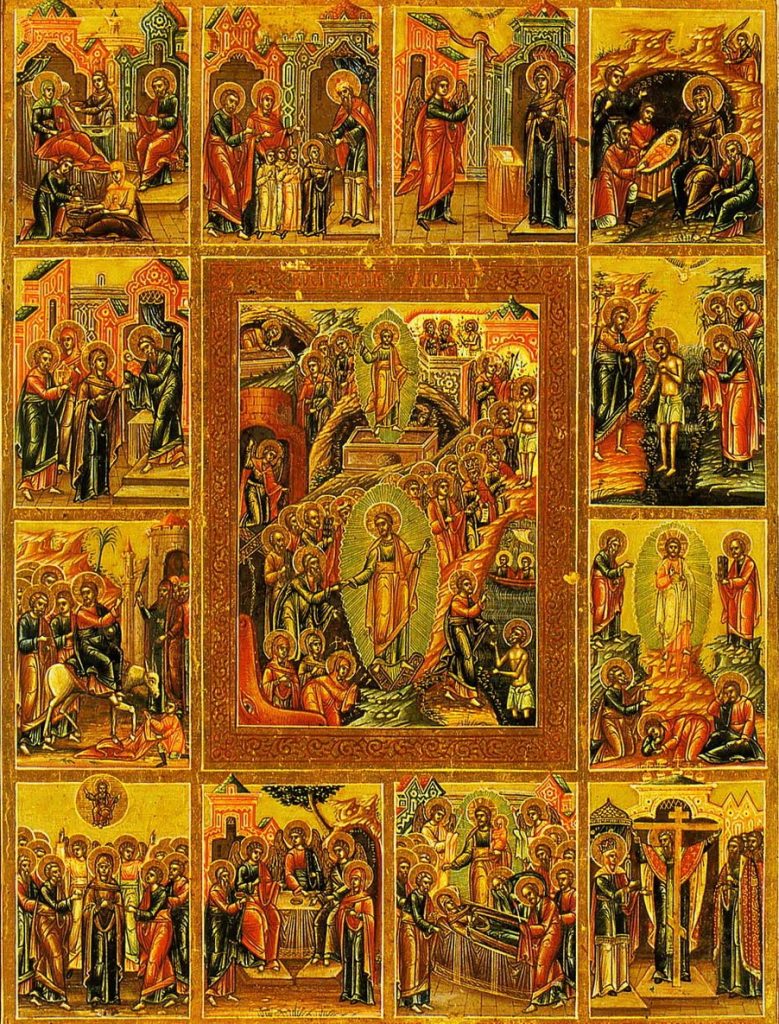
New Liturgical Year – September 1 
The Nativity of our Most Holy Lady, the Mother of God and Ever-Virgin Mary – September 8 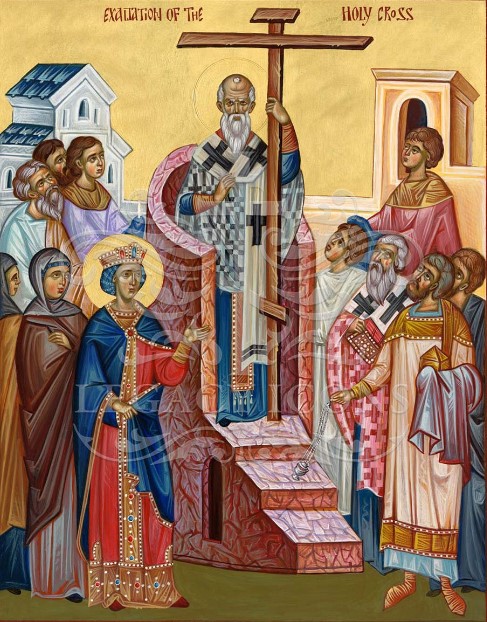
The Universal Exaltation of the Precious and Life-Giving Cross – September 14 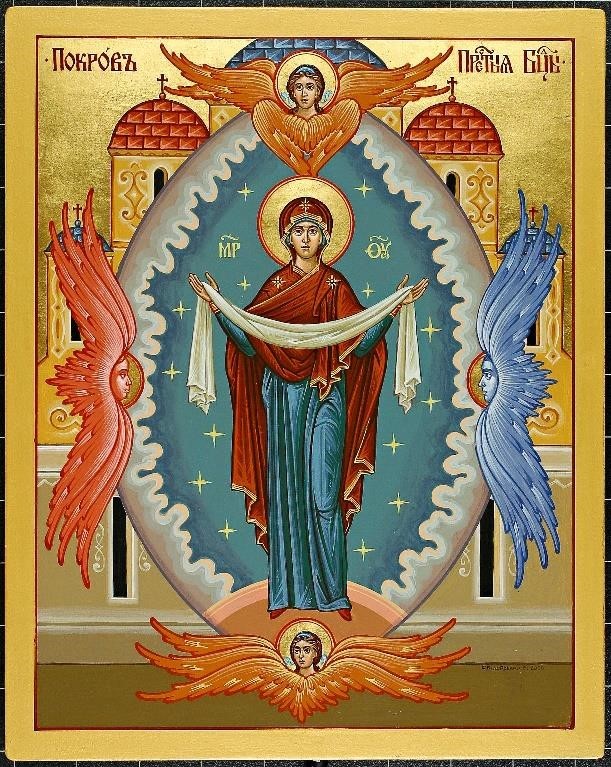
The Protection of our Most Holy Lady the Mother of God and Ever-Virgin Mary – October 1 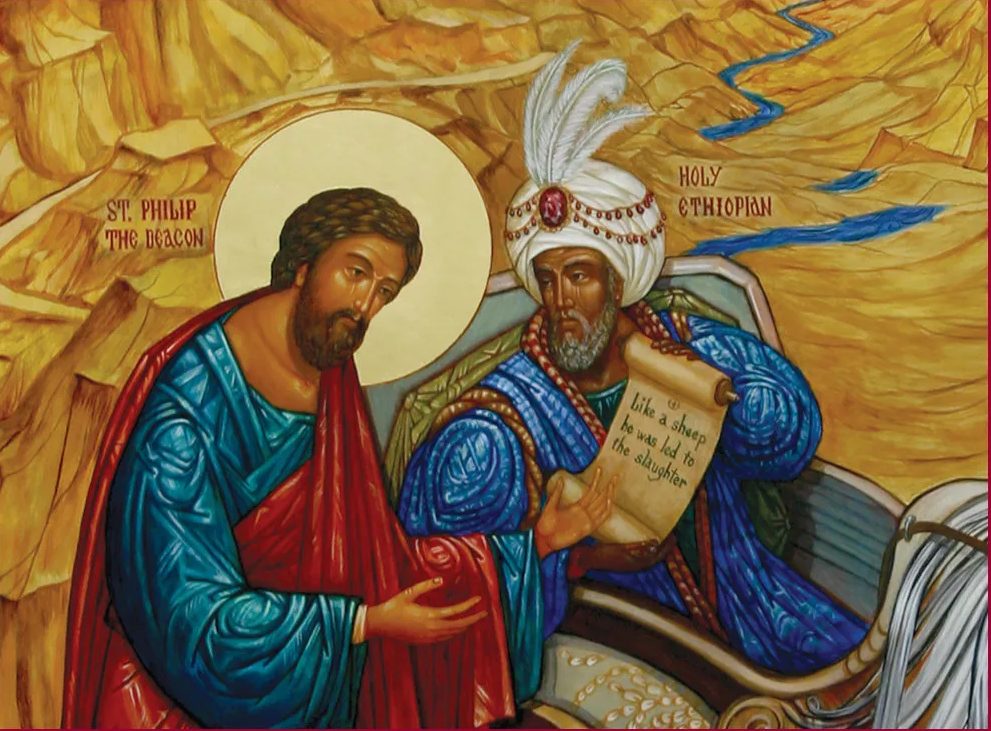
St. Philip, Deacon – October 7 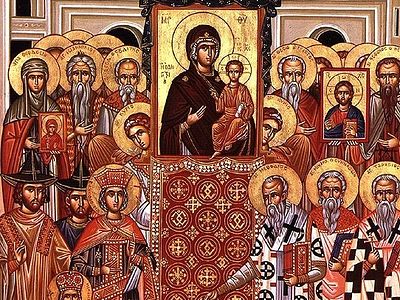
Sunday of the Holy Fathers of the Seventh Ecumenical Council 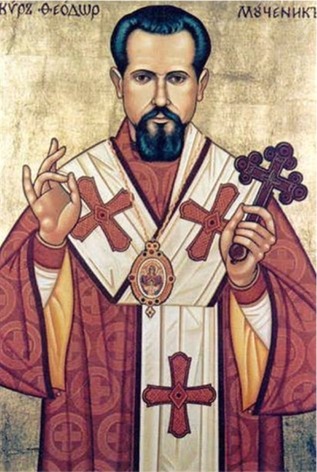
The Holy Martyr Theodore Romzha, Bishop of Mukačevo – November 1 
Synaxis of the Archangel Michael and the Other Bodiless Powers – November 8 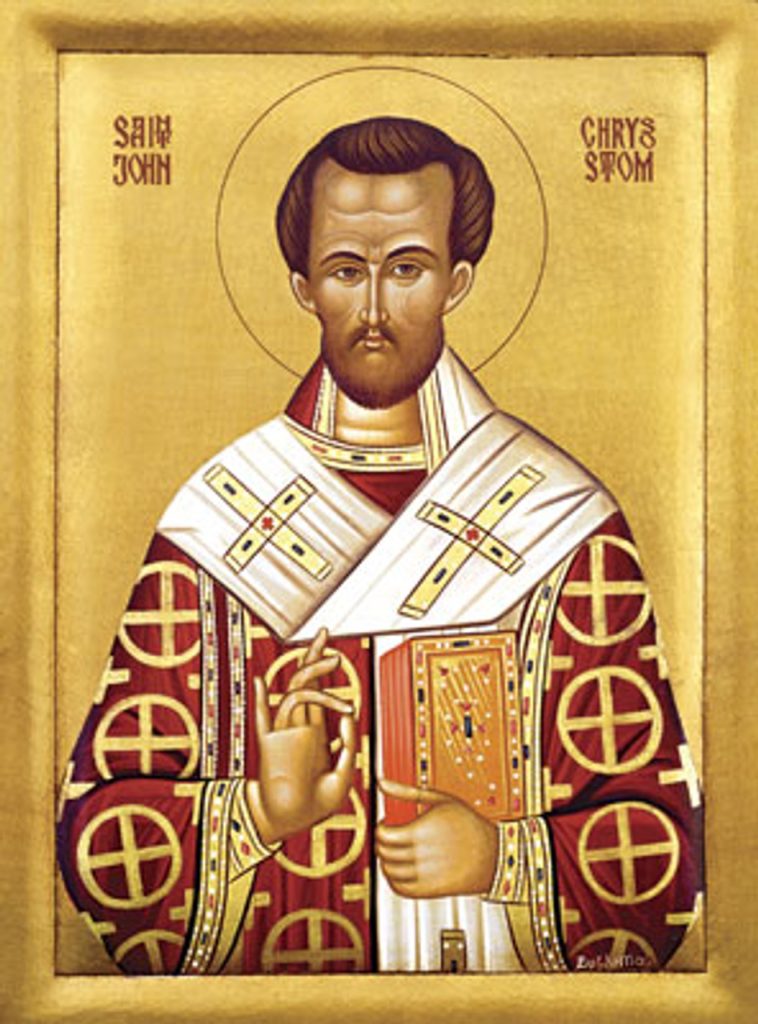
Holy Father John Chrysostom – November 13 
The Entry of the Most Holy Mother of God into the Temple – November 21 
St Nicholas the Wonderworker and Archbishop of Myra in Lycia – December 6 
The Conception of the Most Holy Mother of God by the Righteous Anna – December 8/9 
Our Lady of Guadalupe (Ruthenians) – December 12 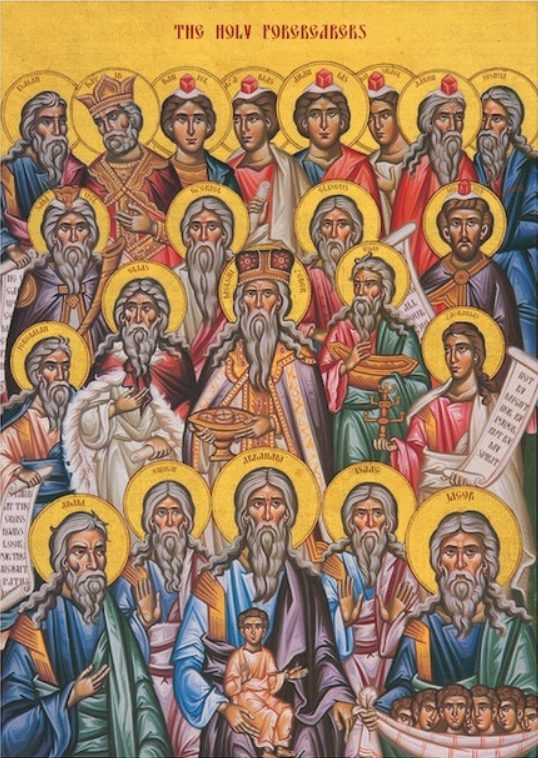
Holy Forefathers 
Nativity of Our Lord (Christmas) – December 25 
Synaxis of the Most Holy Theotokos – December 26 
Protodeacon and Protomartyr Stephen – December 27 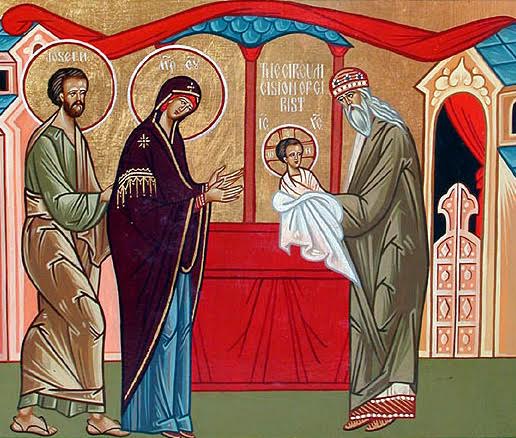
Circumcision of Our Lord, God and Savior, Jesus Christ – January 1 
Our Holy Father Saint Basil the Great – January 1 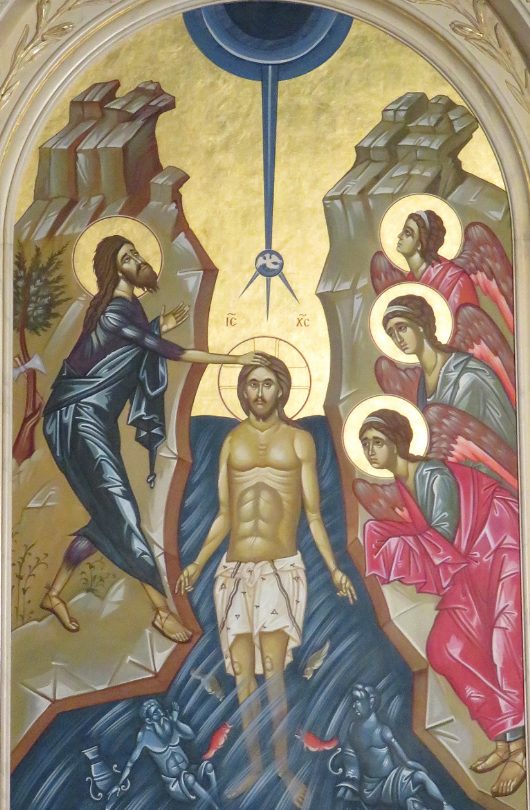
Theophany of Our Lord, God, and Savior, Jesus Christ – January 6 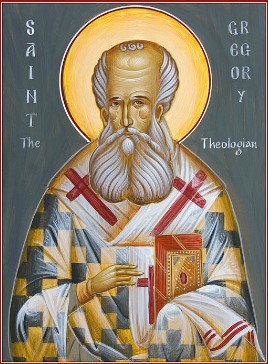
Our Holy Father Gregory the Theologian – January 25 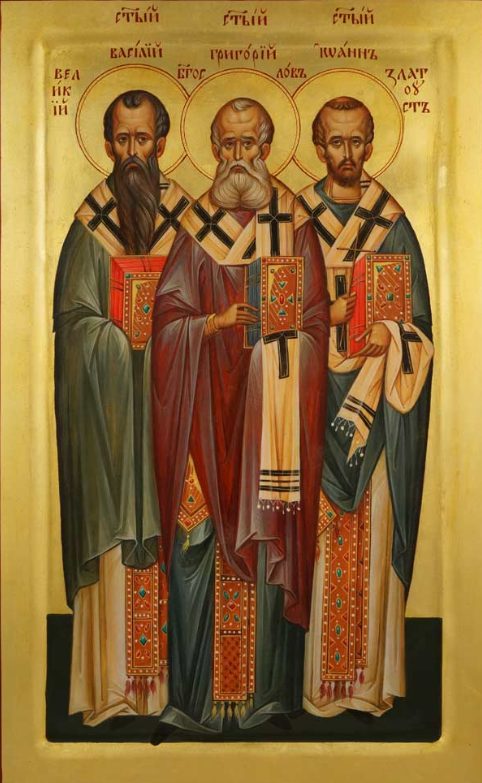
Synaxis of the Ecumenical Teachers and Hierarchs: Basil the Great, Gregory the Theologian, and John Chrysostom – January 30 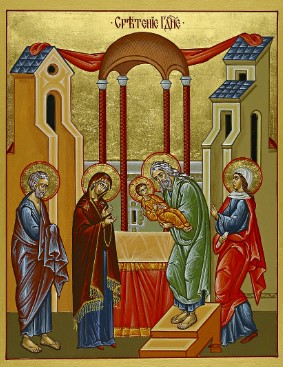
Presentation of Our Lord – February 2 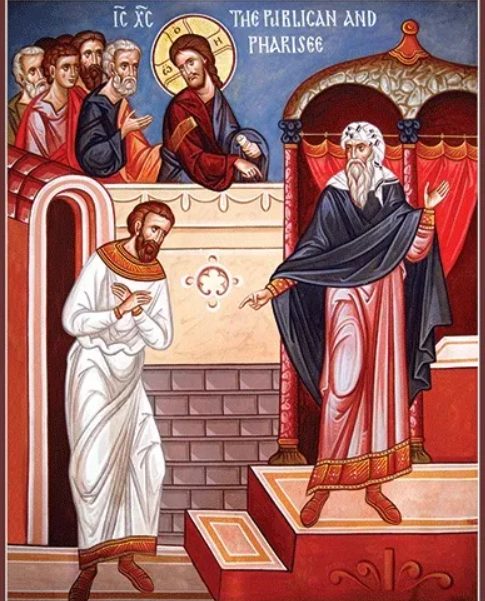
Publican and Pharisee 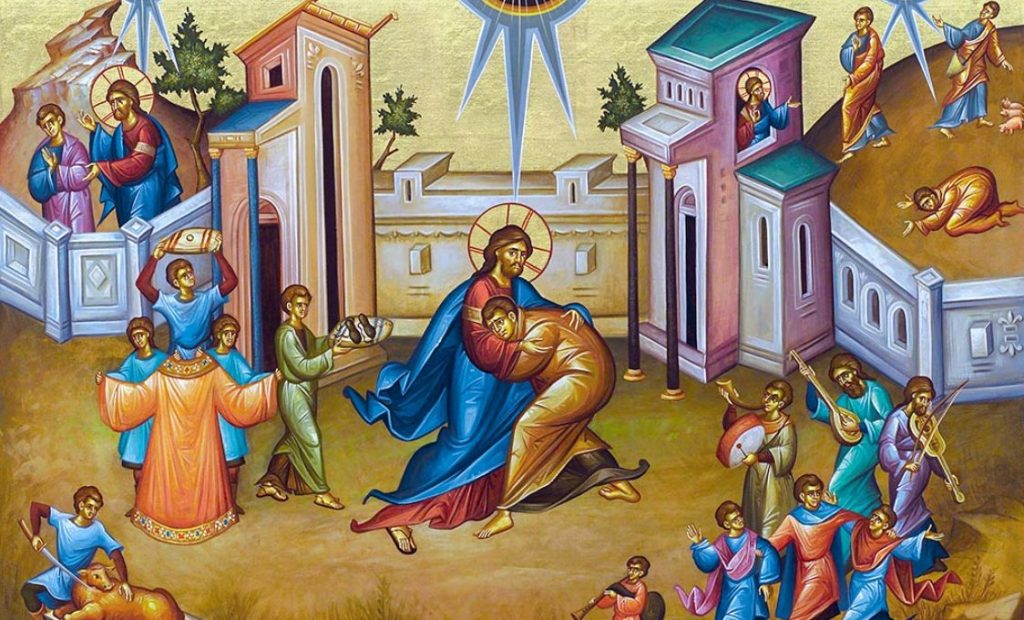
Prodigal Son 
Judgement Sunday (Meatfare) 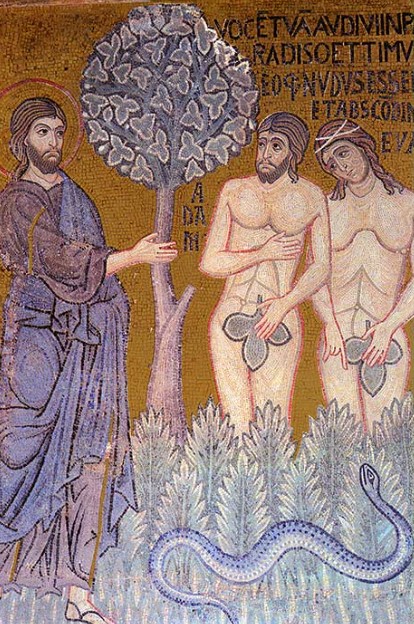
Forgiveness Sunday (Cheesefare) 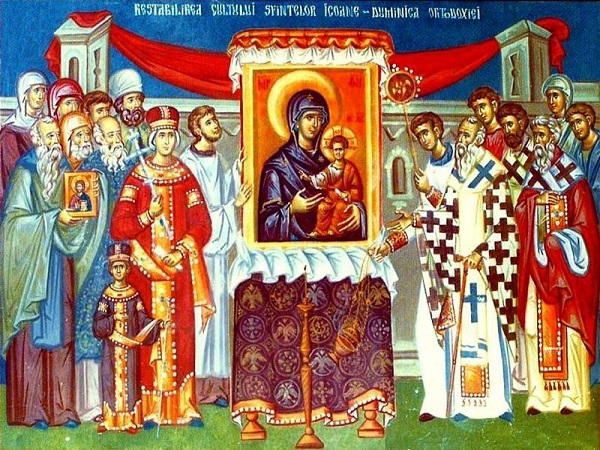
Sunday of Orthodoxy (1st Sunday of Lent) 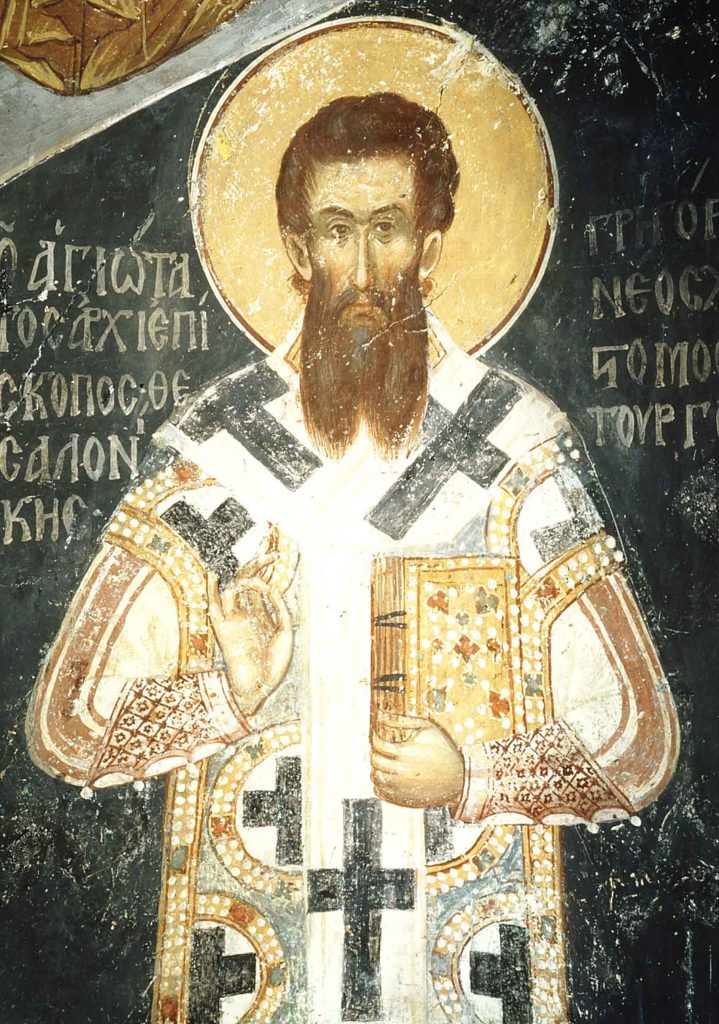
St. Gregory Palamas (2nd Sunday ofLent) 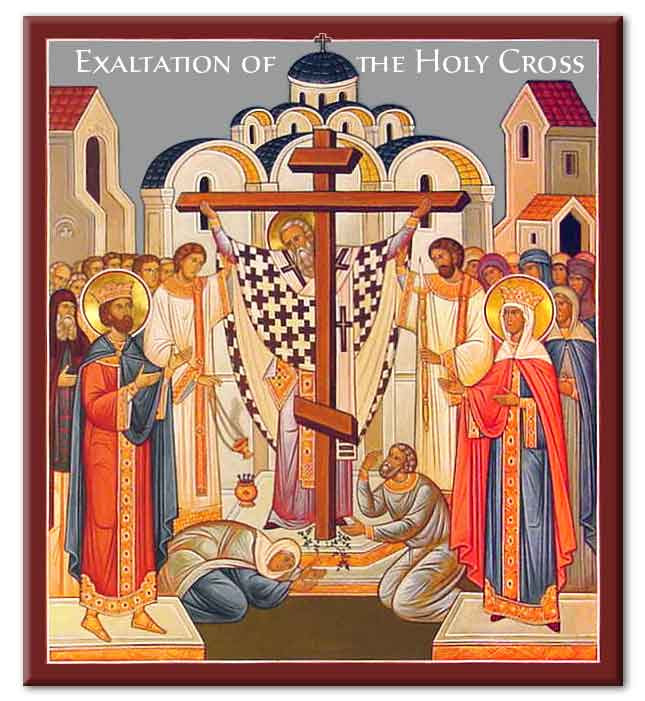
Exultation of the Cross (3rd Sunday of Lent) 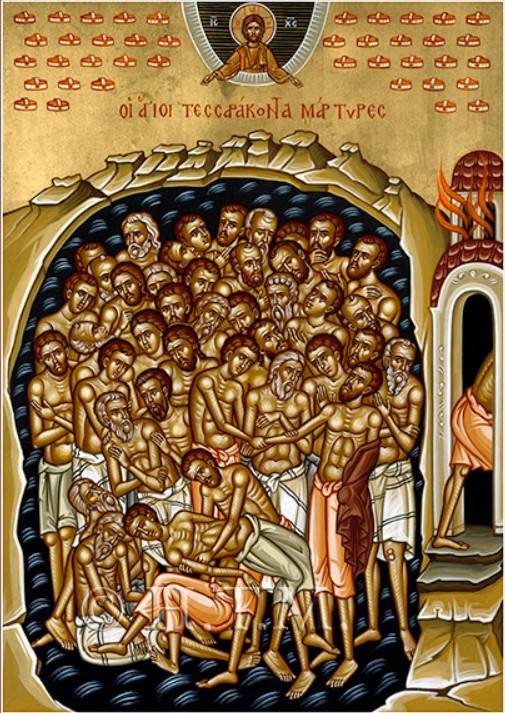
The 40 Holy Martyrs of Sebaste – March 9 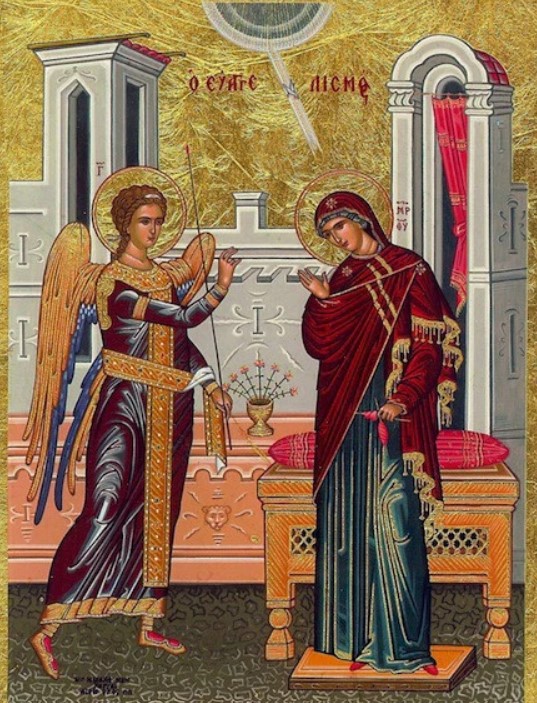
Annunciation – March 25 
St. John of the Ladder (4th Sunday of Lent) 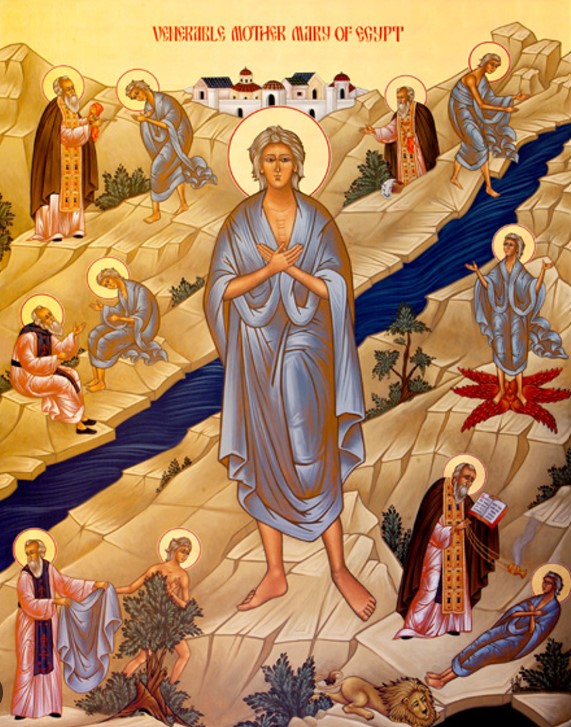
St. Mary of Egypt (5th Sunday of Lent) 
Lazarus Saturday (Before Palm Sunday) 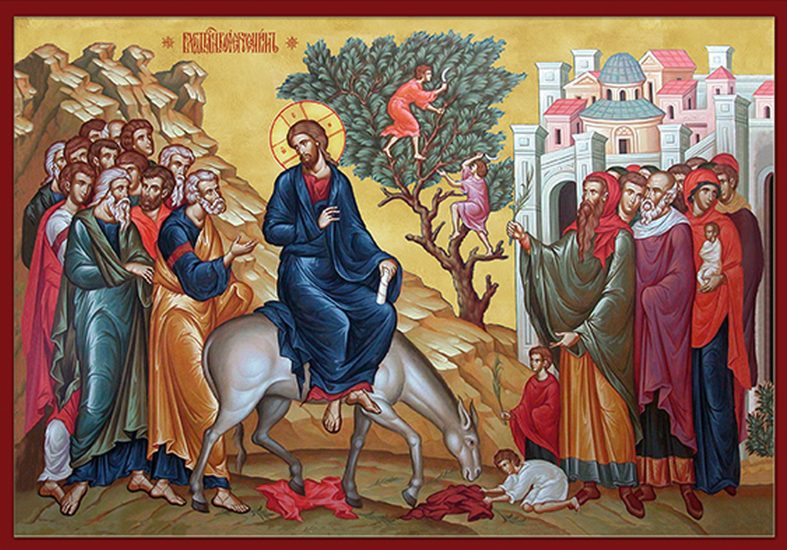
Palm Sunday 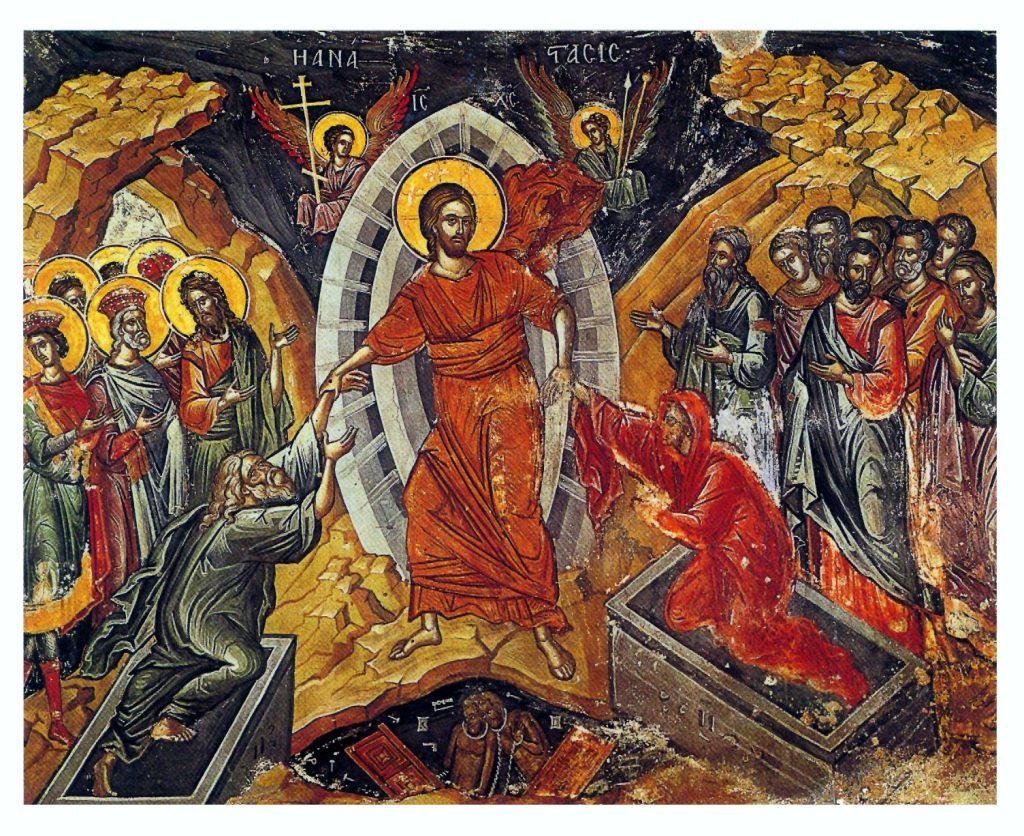
Resurrection Sunday (Pascha/Easter) 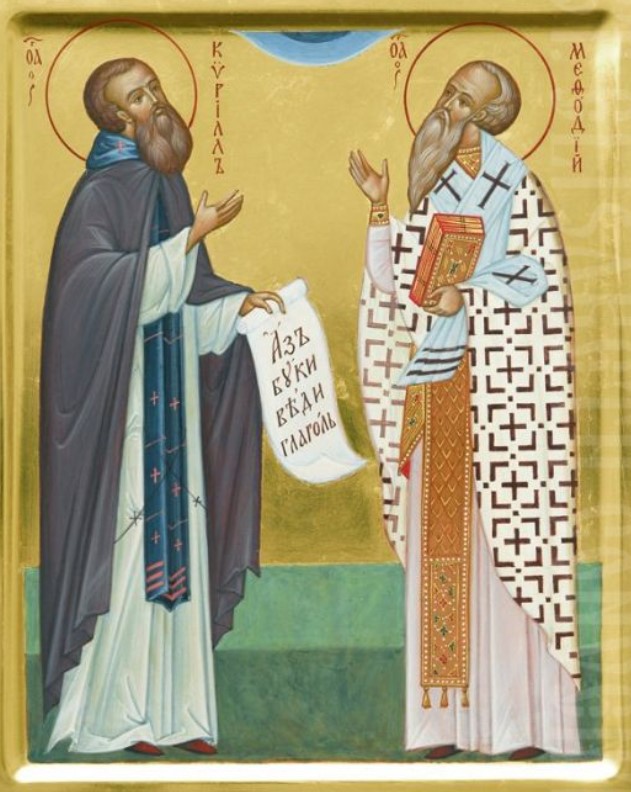
Our Holy Fathers Cyril and Methodius, Apostles of the Slavs – May 11 
Apostle Thomas (2nd Sunday of Pascha) 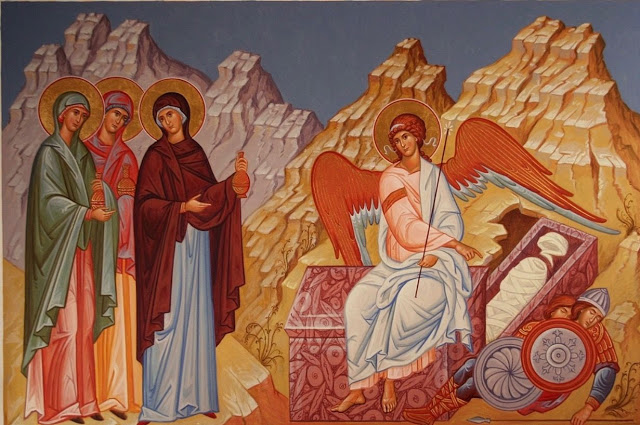
Myrrh-Bearing Women (3rd Sunday of Pascha) 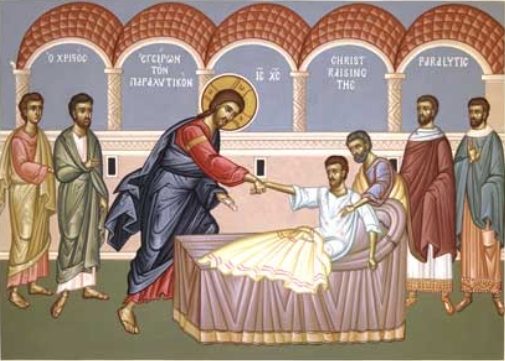
Healing of the Paralytic (4th Sunday of Pascha) 
Samaritan Women at the Well (5th Sunday of Pascha) 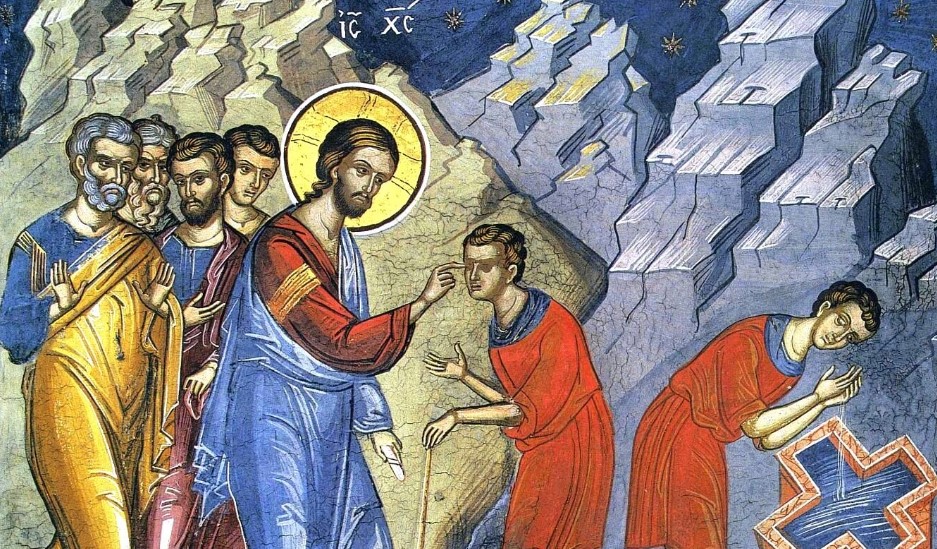
Man Born Blind (6th Sunday of Pascha) 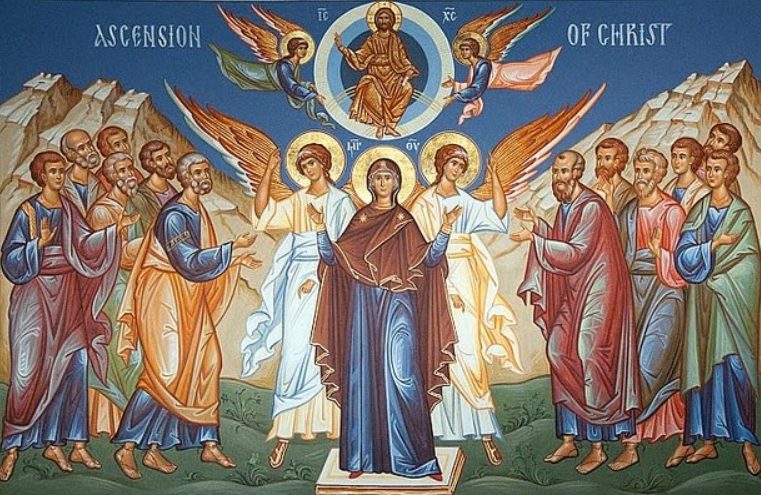
Ascension of Our Lord 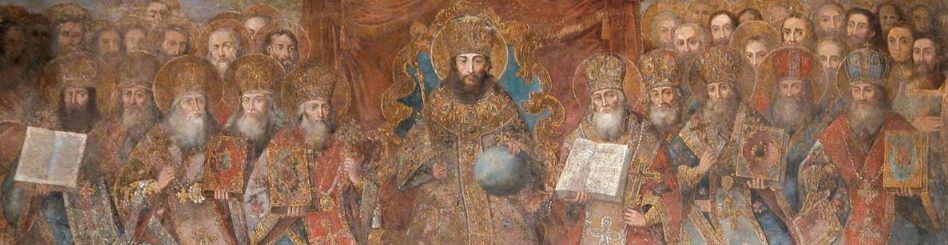
Sunday of the First Ecumenical Council 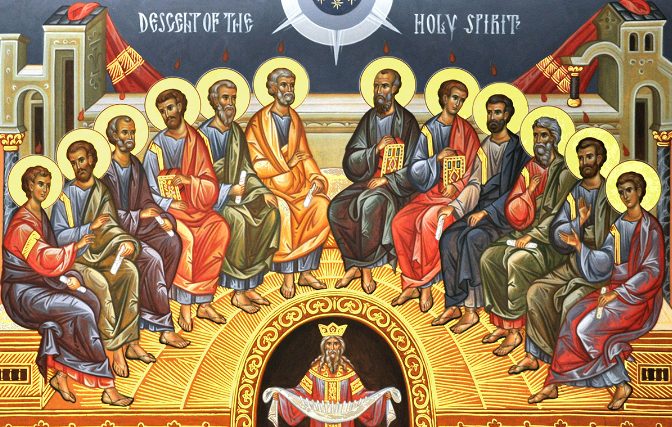
Pentecost 
Feast of the Holy Trinity 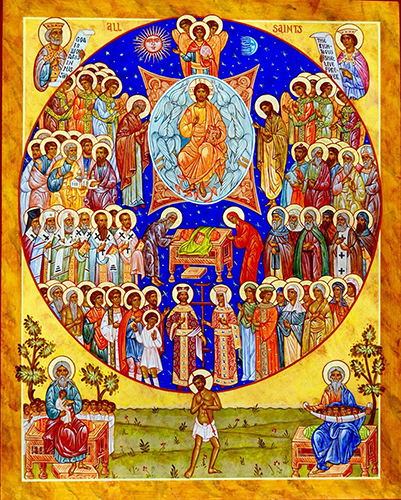
All Saints 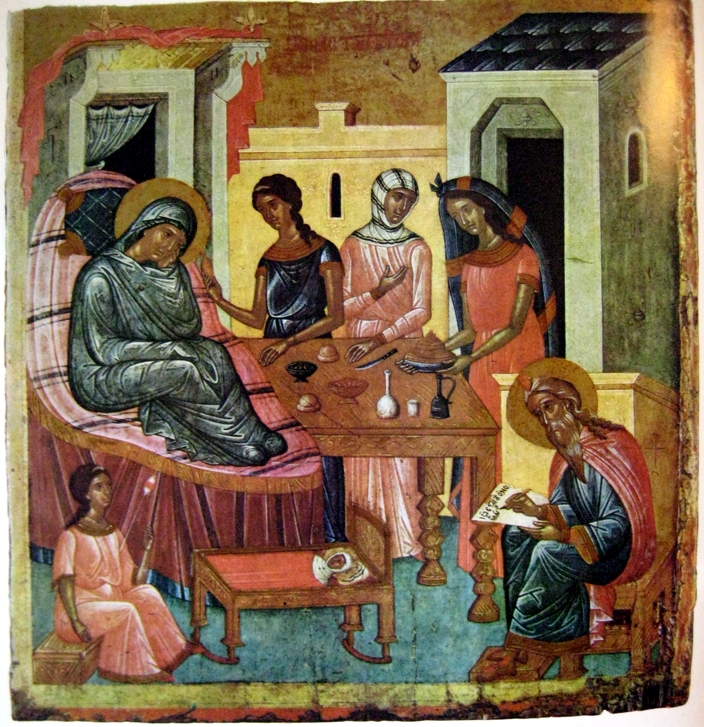
Nativity of the Holy Glorious Prophet, Forerunner and Baptist John – June 24 
The Holy Glorious and All-Praised Leaders of the Apostles, Peter & Paul – June 29 
Sunday of the Holy Fathers of the First Six Ecumenical Councils 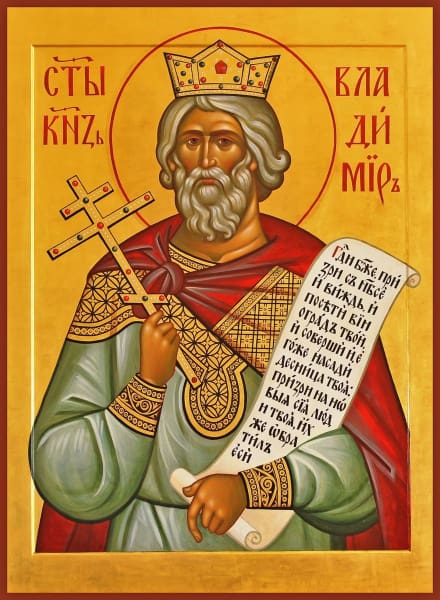
Holy Great Prince Vladimir, Equal to the Apostles – July 15 
Holy, Glorious Prophet Elijah 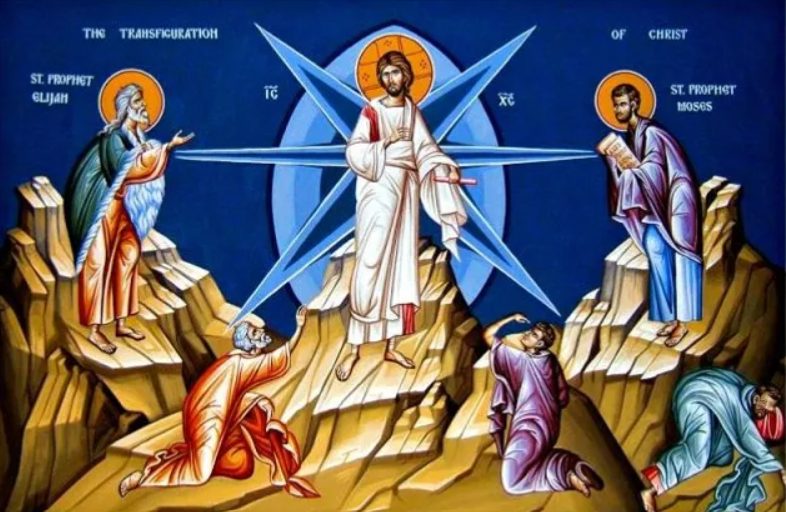
Transfiguration of Our Lord, God and Savior, Jesus Christ – August 6 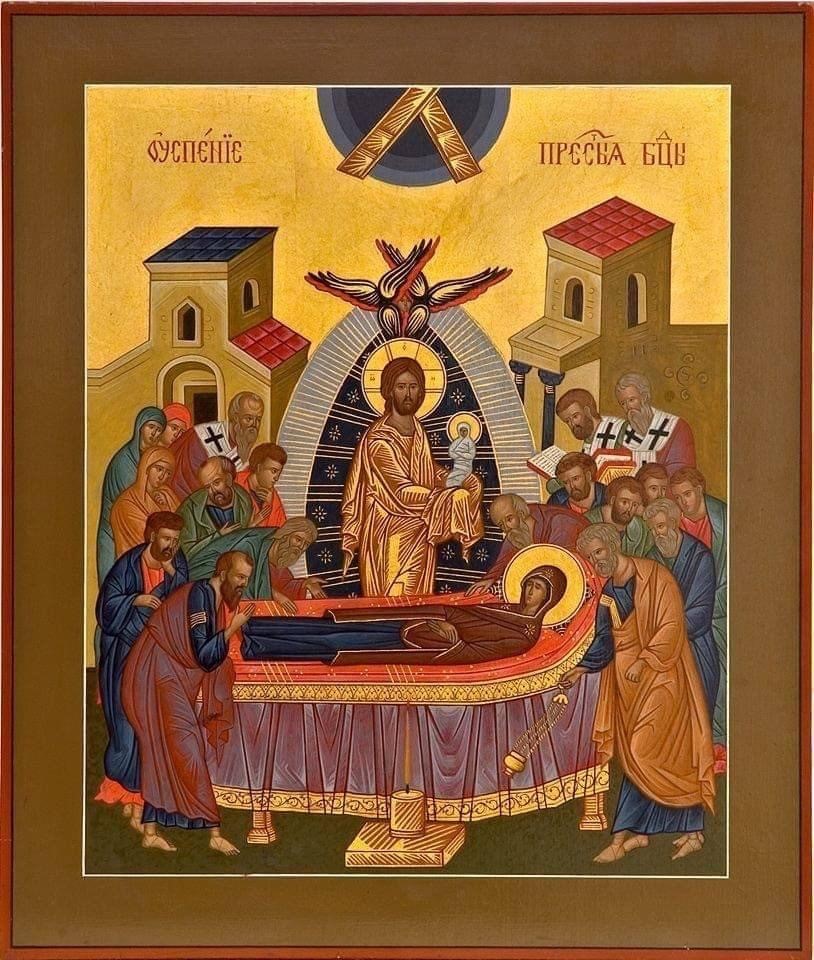
The Dormition of our Most Holy Lady, the Theotokos and Ever-Virgin Mary – August 15 
The Beheading of the Holy Glorious Prophet, Forerunner, and Baptist John – August 29

Byzantine Theology & the Mysteries (Sacraments)
What is a Sacrament and why are they important?
The sacraments are “efficacious signs of grace, instituted by Christ and entrusted to the Church, by which divine life is dispensed to us” (CCC 1131). It is a sacred and visible sign that is instituted by Christ, most usually through His ministers set apart in Holy Priesthood (i.e., Holy Orders – Bishop, Priests, & Deacons), so that the people may have the grace that is an unearned and undeserved gift from God (CCC 1084). Christ was present at the inception of all the sacraments during his ministry and passion, and he is present each time the mysteries are celebrated. These mysteries touch on all the important moments of the Christian life (CCC 1210). For interactive access to the Catechism of the Catholic Church (CCC) click here. There is also the Eastern Catholic Catechism, Christ Our Pascha.
What are the Seven Mysteries/Sacraments?
The seven sacraments were instituted by Christ and are outward signs instituted by Our Lord to give grace. Each of the Holy Mysteries is an action of God in the life of the believer, but they also involve the Church: 1) In Baptism, a believer becomes a member of the Church. 2) In Chrismation, the baptized believer receives spiritual gifts for his own good and for the building up of the church. 3) In the Eucharist, Christians are united ever more closely into the one Body of Christ. 4&5) In the mysteries of Crowning and Priesthood, individuals enter publicly into new states of life (clergy) for the growth of the Church, and receive gifts to assist them in their vocation. 6) In the mystery of Penance, a Christian who has sinned is received back into the Church. 7) In the mystery of the Holy Oil, the church assembles to offer its prayers for its own.
What is Baptism and why is it important?
Through the Mystery of Baptism, a human being – man, woman, or child – is washed clean of sin, made a child of God by adoption, and capable of deification in God. The one being baptized becomes a member of the Church founded by Jesus Christ for the salvation of the world, and an heir to the Kingdom of Heaven. Through this mystery, God comes to dwell in the heart of the believer. Baptism is the first of the Holy Mysteries. It is through baptism — a washing with water in the name of the Father, Son, and Holy Spirit, accompanied by the prayers of the Church, for the forgiveness of sins — that a man, woman, or child becomes a true follower of Christ and a member of the Church. Water is both a means of physical cleansing and a symbol of spiritual cleansing. It was used in the Law of Moses to represent spiritual purification, and those who became converts to Judaism underwent a ritual bath, or baptism (from the Greek word baptizo, “to dip, immerse”) which marked their beginning of a new way of life. Thus, when John the Forerunner (also called John the Baptist) “went about the entire region of the Jordan proclaiming a baptism of repentance which led to the forgiveness of sins” (Luke 3:3), he was calling the people to prepare for the coming Messiah and a new life with God. He told the people, “I am baptizing you in water, but there is one to come who is mightier than I… He will baptize you in the Holy Spirit and in fire.”
In his preaching, Jesus Christ told his followers, “Unless a man is born of water and the Holy Spirit, he cannot enter the kingdom of God” (John 3:5). After his resurrection, He told his apostles: “Go, therefore, and make disciples of all the nations. Baptize them ‘in the name of the Father, and of the Son, and of the Holy Spirit. Teach them to carry out everything I have commanded you.” (Mt. 28:19-20) And when the Gospel (good news) of Christ’s resurrection was preached to the people of Jerusalem, baptism was an essential part of that good news: In those days, Peter addressed the people: “You must reform your lives and be baptized, each one of you, in the name of Jesus Christ, that your sins may be forgiven; then you will receive the gift of the Holy Spirit.”… Those who accepted the message were baptized; some three thousand were added that day. (Acts 2: 38, 41, Acts 8)
Since the beginning of the Church, baptism of believers has been the beginning of life in Christ. That is why in the Symbol of Faith chanted at each Divine Liturgy, we sing: “I believe in one baptism for the forgiveness of sins.”
What is the mystery of Chrismation/Confirmation?
Through the Mystery of Chrismation – that is, by anointing with holy oil – a baptized Christian receives the gift of the Holy Spirit, the principal of movement and growth in the soul. (See: Acts 8:12-19). Chrismation is the second of the three Holy Mysteries of Christian initiation. It is through chrismation — an anointing with chrism, a mixture of olive oil with fragrant spices which has been blessed by the bishop — that a baptized Christian receives the gifts of the Holy Spirit.
When the Gospel was first preached in Jerusalem, the holy apostle Peter told the crowds: “Repent and be baptized… and you will receive the Holy Spirit.” (Acts 2:38). This was the same Spirit that our Lord, during his earthly ministry, had promised to send to all those who would believe in Him (John 7:39). At first, the apostles bestowed the Holy Spirit on new believers through the laying-on of hands (Acts 8:17). Over time, this was supplanted by an anointing with blessed oil. Anointing is an ancient symbol of kingship and priesthood; likewise, in the Old Testament, altars were anointed with oil, a symbol of richness, healing, and strength.
In baptism, the believer is granted a share in the death and resurrection of Christ. In chrismation, the baptized believer, washed clean of sin, is given a share in the ministry of Christ as priest, prophet, and king. For the believer, chrismation is an individual Pentecost.
What is the mystery of the Eucharist?
In the Mystery of the Eucharist, the Christian becomes intimately united with the very life of God, receiving the Body and Blood of our Lord Jesus Christ as spiritual nourishment, in accordance with the words of Our Lord: “He who eats my flesh and drinks my blood has life everlasting” (John 6:54).
Old Testament Prefigurement (Some Examples):
- Genesis 14.18
- Exodus 12.7
- Exodus 16.4
- Exodus 25.30
- 1 Kings 19.8 (3Kings in LXX)
- Psalm 78.25 (77.25 in LXX)
- Proverbs 9.5
- Isaiah 25.6
New Testament/Covenant in the Cross of Christ:
- Mark 8.14
- Mark 14.22-24
- Matthew 26.26
- Luke 22.19-20
- Luke 24.30
- John 6.35-58
- John 15.5
- John 19.34
- Acts 2.42-47
- Acts 27.35
- 1 Corinthians 10.15-18
- 1 Corinthians 11.28-29
What do the early Church Fathers say about the Eucharist?
FATHERS & EARLY CHURCH
The Didache (c. 90 A.D.)
First, concerning the cup. We thank thee, our Father, for the holy vine, David thy Son, which thou hast made known unto us through Jesus Christ thy Son; to thee be the glory forever. And concerning the broken bread. We thank thee, our Father, for the life and knowledge which thou hast made known unto us through Jesus thy Son; to thee be the glory forever. As this broken bread was once scattered on the mountains, and after it had been brought together became one, so may thy Church be gathered together from the ends of the earth unto thy kingdom; for thine is the glory, and the power, through Jesus Christ, forever. And let none eat or drink of your Eucharist but such as have been baptized into the name of the Lord, for of a truth the Lord hath said concerning this, Give not that which is holy unto dogs. ( 9:1-5). On the Lord’s Day of the Lord gather together, break bread, and give thanks, after confessing your transgressions so that your sacrifice may be pure. Let no one who has a quarrel with his neighbor join you until he is reconciled by the Lord: “In every place and time let there be offered to me a clean sacrifice. For I am Great King,” says the Lord, “and My name is wonderful among the Gentiles.” (14:1-2)
St. Ignatius of Antioch (c. 110 A.D.)
I have no taste for corruptible food nor for the pleasures of this life. I desire the Bread of God, which is the flesh of Jesus Christ, who was of the seed of David; and for drink, I desire His blood, which is love incorruptible. (Letter to the Romans 7:3).
Take care, then, to use one Eucharist, so that whatever you do, you do according to God: For there is one flesh of our Lord Jesus Christ, and one cup in the union of His blood; one altar, as there is one bishop with the presbytery… (Letter to the Philadelphians 4:1)
- Direct corollary with Holy Orders in apostolic succession, through the visible Church, to offer the sacraments.
They [i.e. the Gnostics] abstain from the Eucharist and from prayer because they do not confess that the Eucharist is the flesh of our savior Jesus Christ, flesh which suffered for our sins and which the Father, in his goodness, raised up again. (Letter to Smyrnians 7:1)
St. Justin the Martyr (c. 100 – 165 A.D.)
For not as common bread nor common drink do we receive these; but since Jesus Christ our Savior was made incarnate by the word of God and had both flesh and blood for our salvation, so too, as we have been taught, the food which has been made into the Eucharist by the Eucharistic prayer set down by Him, and by the change of which our blood and flesh is nourished, is both the flesh and the blood of that incarnated Jesus. (First Apology, 66)
- Direct affirmation of real change, not symbolic. Implicit reality of a clergy that are set apart for this by the Church (i.e.: Bishops and Presbyters).
St. Irenaeus of Lyons (c. 140 – 202 A.D.)
…He took from among creation that which is bread, and gave thanks, saying, “This is My body.” The cup likewise, which is from among the creation to which we belong, He confessed to be His blood. He taught the new sacrifice of the New Covenant, of which Malachi, one of the twelve prophets, had signified beforehand: [quotes Mal 1:10-11]. (Against Heresies 4:17:5)
But what consistency is there in those who hold that the bread over which thanks have been given is the body of their Lord, and the cup His blood, if they do not acknowledge that He is the Son of the Creator… How can they say that the flesh which has been nourished by the body of the Lord and by His blood gives way to corruption and does not partake of life? …For as the bread from the earth, receiving the invocation of God, is no longer common bread but the Eucharist, consisting of two elements, earthly and heavenly… (Against Heresies 4:18:4-5)
If the body be not saved, then, in fact, neither did the Lord redeem us with His blood; and neither is the cup of the Eucharist the partaking of His blood nor is the bread which we break the partaking of His body…He has declared the cup, a part of creation, to be His own blood, from which He causes our blood to flow; and the bread, a part of creation, He has established as his own body, from which He gives increase to our bodies.
When, therefore, the mixed cup and the baked bread receives the Word of God and becomes the Eucharist, the body of Christ, and from these, the substance of our flesh is increased and supported, how can they say that the flesh is not capable of receiving the gift of God, which is eternal life — flesh which is nourished by the body and blood of the Lord…receiving the Word of God, becomes the Eucharist, which is the body and blood of Christ… (Against Heresies 5:2:2-3)
Origen (c. 185 – 254 A.D.)
You see how the altars are no longer sprinkled with the blood of oxen, but consecrated by the precious blood of Christ (Homilies on Joshua 2:1)
You are accustomed to take part in the divine mysteries, so you know how, when you have received the body of the Lord, you reverently exercise every care lest a particle of it fall, and lest anything of the consecrated gift perish….how is it that you think neglecting the word of God a lesser crime than neglecting his body? (Homilies on Exodus 13:3)
St. Clement of Alexandria (c. 150 – 216 A.D.)
Calling her children about her, she [the Church] nourishes them with holy milk, that is, with the Infant Word…The Word is everything to a child: both Father and Mother, both Instructor and Nurse. “EAT MY FLESH,” He says, “AND DRINK MY BLOOD.” The Lord supplies us with these intimate nutriments. He delivers over his flesh, and pours out his blood, and nothing is lacking for the growth of His children. O incredible mystery! (Instructor of Children 1:6:42,1,3)
St. Cyprian of Carthage (c. 200 – 258 A.D.)
Also in the priest Melchizedek, we see the Sacrament of the Sacrifice of the Lord prefigured…The order certainly is that which comes from his [Mel’s] sacrifice and which comes down from it: because Mel was a priest of the Most High God; because he offered bread; and because he blessed Abraham. And who is more a priest of the Most High God than our Lord Jesus Christ, who, when He offered sacrifice to God the father, offered the very same which Melchizedek had offered, namely bread and wine, which is in fact His body and blood! (Letters 63:4)
If Christ Jesus, our Lord, and God, is Himself the High Priest of God the Father; and if He offered Himself as a Sacrifice to the Father; and if He commanded that this be done in commemoration of Himself, then certainly the priest, who imitates that which Christ did, truly functions in place of Christ. (Letters 63:14)
1st Ecumenical ~ Council of Nicaea (c. 325 A.D.)
It has come to the attention of the holy and great council that in some localities and cities deacons give the Eucharist to presbyters, although neither the canon nor the custom permits those who do not offer sacrifice to give the Body of Christ to those who do offer the sacrifice… (Canon 18)
St. Ephraim (c. 306 – 373 A.D.)
Our Lord Jesus took in His hands what in the beginning was only bread; and He blessed it, and signed it, and made it holy in the name of the Father and in the name of the Spirit, and He broke it and in His gracious kindness, He distributed it to all His disciples one by one. He called the bread His living body, and did Himself fill it with Himself and the Spirit. And extending His hand, He gave them the Bread which His right hand had made holy: “Take, all of you eat of this, which My word has made holy. Do not now regard as bread that which I have given you; but take, eat this Bread [of life], and do not scatter the crumbs; for what, for what I have called My Body, that it is indeed. One particle from its crumbs is able to sanctify thousands and thousands, and is sufficient to afford life to those who eat of it. Take, eat, entertaining no doubt of faith, because this is My Body, and whoever eats it in belief eats in it Fire and Spirit. But if any doubter eat of it, for him it will be only bread. And whoever eats in belief the Bread made holy in My name, if he be pure, he will be preserved in his purity; and if he be a sinner, he will be forgiven.” But if anyone despise it or reject it or treat it with ignominy, it may be taken as a certainty that he treats with ignominy the Son, who called it and actually made it to be His Body.
After the disciples had eaten the new and holy Bread, and when they understood by faith that they had eaten of Christ’s body, Christ went on to explain and to give them the whole Sacrament. He took and mixed a cup of wine. Then He blessed it, and signed it, and made it holy, declaring that it was His own Blood, which was about to be poured out…Christ commanded them to drink, and He explained to them that the cup which they were drinking was His own Blood: “This is truly My Blood, which is shed for all of you. Take, all of you, drink of this, because it is a new covenant in My Blood. As you have seen Me do, do you also in My memory. Whenever you are gathered together in My name in Churches everywhere, do what I have done, in memory of Me. Eat My Body, and drink My Blood, a covenant new and old.” (Homilies 4:4; 4:6)
St. Athanasius (c. 295 – 373 A.D.)
You shall see the Levites [Deacons] bringing loaves and a cup of wine, and placing them on the table. So long as the prayers of supplication and entreaties have not been made, there is only bread and wine. But after the great and wonderful prayers have been completed, then the bread becomes the Body, and the wine the Blood, of our Lord Jesus Christ….Let us approach the celebration of the mysteries. This bread and this wine, so long as the prayers and supplications have not taken place, remain simply what they are. But after the great prayers and holy supplications have been sent forth, the Word comes down into the bread and wine — and thus is His Body confected. (Sermon to the Newly Baptized, from Eutyches)
St. Cyril of Jerusalem (c. 350 A.D.)
For just as the bread and the wine of the Eucharist before the holy invocation of the adorable Trinity were simple bread and wine, but the invocation having been made, the bread becomes the Body of Christ and the wine the Blood of Christ… (Catechetical Lectures 19 [Mystagogy 1], 7)
This one teaching of the blessed Paul is enough to give you complete certainty about the Divine Mysteries, by your having been deemed worthy of which, you have become united in body and blood with Christ. For Paul proclaimed clearly that: “On the night in which He was betrayed, our Lord Jesus Christ, taking bread and giving thanks, broke it and gave it to His disciples, saying: ‘Take, eat, This is My Body.’ And taking the cup and giving thanks, He said, ‘Take, drink, This is My Blood.'” He Himself, therefore, having declared and said of the Bread, “This is My Body,” who will dare any longer to doubt? And when He Himself has affirmed and said, “This is My Blood,” who can ever hesitate and say it is not His Blood? …Once in Cana of Galilee He changed the water into wine, a thing related to blood; and is His changing of wine into Blood not credible? When invited to an ordinary marriage, with a miracle He performed that glorious deed. And is it not much more to be confessed that He has bestowed His Body and His Blood upon the wedding guests?…Do not, therefore, regard the Bread and the Wine as simply that; for they are, according to the Master’s declaration, the Body and Blood of Christ. Even though the senses suggest to you the other, let faith make you firm. Do not judge in this matter by taste, but — be fully assured by the faith, not doubting that you have been deemed worthy of the Body and Blood of Christ…Having learned these things, and being fully convinced that the apparent bread is not bread, even though it is sensible to the taste, but the Body of Christ; and that the apparent Wine is not wine, even though the taste would have it so… (22 [Mystagogy 4], 1-9) Then, having sanctified ourselves by these spiritual songs, we call upon the benevolent God to send out the Holy Spirit upon the gifts which have been laid out: that He may make the bread the Body of Christ, and the wine the Blood of Christ; for whatsoever the Holy Spirit touches, that is sanctified and changed. (23 [Mystagogy 5], 7)
St. Hilary of Poitiers (c. 315 – 368 A.D.)
When we speak of the reality of Christ’s nature being in us, we would be speaking foolishly and impiously — had we not learned it from Him. For He Himself says: “My Flesh is truly Food, and My Blood is truly Drink. He that eats My Flesh and drinks My Blood will remain in Me and I in Him.” As to the reality of His Flesh and Blood, there is no room left for doubt, because now, both by the declaration of the Lord Himself and by our own faith, it is truly Flesh and it is truly Blood. And These Elements bring it about, when taken and consumed, that we are in Christ and Christ is in us. Is this not true? Let those who deny that Jesus Christ is true God be free to find these things untrue. But He Himself is in us through the flesh and we are in Him, while that which we are with Him is in God. (The Trinity 8:14)
St. Basil the Great (c. 330 – 379 A.D.)
To communicate each day and to partake of the holy Body and Blood of Christ is good and beneficial; for He says quite plainly: “He that eats My Flesh and drinks My Blood has eternal life.” Who can doubt that to share continually in life is the same thing as having life abundantly? We ourselves communicate four times each week…and on other days if there is a commemoration of any saint. (Letter of Basil to a Patrician Lady Caesaria)
St. Gregory of Nazianz (c. 330 – 389 A.D.)
The tongue of a priest meditating on the Lord raises the sick. Do, then, the greater thing by celebrating the liturgy, and loose the great mass of my sins when you lay hold of the Sacrifice of the Resurrection. Most Reverend friend, Cease not to pray and plead for me when you draw down the Word by your word, when in an unbloody cutting you cut the Body and Blood of the Lord, using your voice for a sword. (Letter of Gregory to Amphilochius, Bishop of Iconium)
St. Gregory of Nyssa (c. 335 – 394 A.D.)
This Body, by the indwelling of God the Word, has been made over to divine dignity. Rightly then, do we believe that the bread consecrated by the word of God has been made over into the Body of God the Word. For that Body was, as to its potency, bread; but it has been consecrated by the lodging there of the Word, who pitched His tent in the flesh. From the same cause, therefore, by which the bread that was made over into that Body is made to change into divine strength, a similar result now takes place. As in the former case, in which the grace of the Word made holy that body the substance of which is from bread, and in a certain manner is itself bread, so in this case too, the bread, as the Apostle says, “is consecrated by God’s word and by prayer”; not through its being eaten does it advance to become the Body of the Word, but it is made over immediately into the Body by means of the word, just as was stated by the Word, “This is My Body!” …In the plan of His grace He spreads Himself to every believer by means of that Flesh, the substance of which is from wine and bread, blending Himself with the bodies of believers, so that by this union with the Immortal, man, too, may become a participant in incorruption. These things He bestows through the power of the blessing which transforms the nature of the visible things to that [of the Immortal]. (The Great Catechism 37)
The bread again is at first common bread; but when the mystery sanctifies it, it is called and actually becomes the Body of Christ. So too the mystical oil, so too the wine; if they are things of little worth before the blessing, after their sanctification by the Spirit each of them has its own superior operation. (Sermon on the Day of Lights or On the Baptism of Christ)
He offered Himself for us, Victim and Sacrifice, and Priest as well, and “Lamb of God, who takes away the sin of the world.” When did He do this? When He made His own Body food and His own Blood drink for His disciples; for this much is clear enough to anyone, that a sheep cannot be eaten by a man unless its being eaten be preceded by its being slaughtered. This giving of His own Body to His disciples for eating clearly indicates that the sacrifice of the Lamb has now been completed.(Sermon One on the Resurrection of Christ)
St. Epiphanius of Salamis (c. 315 – 403 A.D.)
We see that the Savior took in His hands, as it is in the Gospel, when He was reclining at the supper; and He took this, and giving thanks, He said: “This is really Me.” And He gave to His disciples and said: “This is really Me.” And we see that It is not equal nor similar, not to the incarnate image, not to the invisible divinity, not to the outline of His limbs. For It is round of shape, and devoid of feeling. As to Its power, He means to say even of Its grace, “This is really Me”; and none disbelieves His word. For anyone who does not believe the truth in what He says is deprived of grace and of Savior. (The Man Well-Anchored 57)
Theodore of Mopsuestia (c. 428 A.D.)
He did not say, “This is the symbol of My Body, and this, of My Blood,” but “This is My Body and My Blood,” teaching us not to look upon the nature of what is set before us, but that it is transformed by means of the Eucharistic action into Flesh and Blood. (Commentary on Matthew 26:26)
It is proper, therefore, that when [Christ] gave the Bread He did not say, “This is the symbol of My Body,” but, “This is My Body.” In the same way when He gave the Cup He did not say, “This is the symbol of My Blood,” but, “This is My Blood”; for He wanted us to look upon the [Eucharistic elements] after their reception of grace and the coming of the Holy Spirit not according to their nature, but [that we should] receive them as they are, the Body and Blood of our Lord. We ought…not regard the [Eucharistic elements] merely as bread and cup, but as the Body and Blood of Christ, into which they were transformed by the descent of the Holy Spirit.(Catechetical Homilies 5)
[If we have sinned], the Body and Blood of our Lord…will strengthen us…if with diligence we do good works and turn from evil deeds and truly repent of the sins that befall us, undoubtedly we shall obtain the grace of the remission of our sins in our receiving of the holy Sacrament. (Catechetical Homilies 16)
At first [the offering] is laid upon the altar as mere bread, and wine mixed with water; but by the coming of the Holy Spirit it is transformed into the Body and the Blood, and thus it is changed into the power of a spiritual and immortal nourishment. (Catechetical Homilies 16)
St. Ambrose of Milan (c. 333 – 397 A.D.)
A priest must offer something in sacrifice and according to the Law he must enter the holy place through blood. Therefore, because God had repudiated the blood of bulls and of rams, it was necessary for this Priest, as you have read, to enter into the Holy of Holies, penetrating the heights of heaven, by means of His own blood, so that He might become an eternal oblation for our sins. Priest and Victim, therefore, are one and the same. But the priesthood and the sacrifice are a duty of the human condition; for like a lamb He was led to the slaughter, and He is a priest according to the order of Melchizedek. (The Faith 3:11:87)
“My flesh is truly food and My blood is truly drink.” You hear Him speak of His flesh, you hear Him speak of His blood, you know the sacred signs of the Lord’s death; and do you worry about His divinity? Hear His words when he says: “A spirit has not flesh and bones.” As often as we receive the sacramental elements which through the mystery of the sacred prayer are transformed into the flesh and blood of the Lord, we proclaim the death of the Lord. (The Faith 4:10:124)
Perhaps you may be saying: I see something else; how can you assure me that I am receiving the Body of Christ? It but remains for us to prove it. And how many are the examples we might use! Let us prove that this is not what nature has shaped it to be, but what the blessing has consecrated; for the power of the blessing is greater than that of nature, because by the blessing even nature itself is changed…Christ is in that Sacrament because it is the Body of Christ; yet, it is not on that account corporeal food, but spiritual. Whence also His Apostle says of the type: “For our fathers ate spiritual food and drank spiritual drink” (1 Cor 10:2-4; 15:44). For the body of God is a spiritual body. (The Mysteries 9:50; 9:58)
You may perhaps say: “My bread is ordinary.” But that bread is bread before the words of the Sacraments; where the consecration has entered in, the bread becomes the flesh of Christ. And let us add this: How can what is bread be the Body of Christ? By the consecration. The consecration takes place by certain words; but whose words? Those of the Lord Jesus… but when the time comes for the confection of the venerable Sacrament, then the priest uses not his own words but the words of Christ. Therefore it is the word of Christ that confects this Sacrament….Before it be consecrated it is bread; but where the words of Christ come in, it is the Body of Christ. Finally, hear Him saying: “All of you take and eat of this; for this is My Body.” And before the words of Christ the chalice is full of wine and water; but where the words of Christ have been operative it is made the Blood of Christ, which redeems the people. (The Sacraments 4:4:14; 4:5:23)
St. John Chrysostom (c. 344 – 407 A.D.)
When you see the Lord immolated and lying upon the altar, and the priest bent over that sacrifice praying, and all the people empurpled by that precious blood, can you think that you are still among men and on earth? Or are you not lifted up to heaven? (Priesthood 3:4:177)
Christ is present. The One [Christ] who prepared that [Holy Thursday] table is the very One who now prepares this [altar] table. For it is not a man who makes the sacrificial gifts become the Body and Blood of Christ, but He that was crucified for us, Christ Himself. The priest stands there carrying out the action, but the power and the grace is of God, “THIS IS MY BODY,” he says. This statement transforms the gifts. (Homilies on Treachery of Judas 1:6)
Let us therefore in all respects put our faith in God and contradict Him in nothing, even if what is said seems to be contrary to our reasonings and to what we see. Let His WORD be of superior authority to reason and sight. This to be our practice in respect to the [Eucharistic] Mysteries, not looking only upon what is laid out before us, but taking heed also of His words. For His Word cannot deceive; but our senses are easily cheated. His word never failed; our senses err most of the time. When the Word says, “THIS IS MY BODY,” be convinced of it and believe it, and look at it with the eyes of the mind. For Christ did not give us something tangible, but even in His tangible things all is intellectual. So too with Baptism: the gift is bestowed through what is a tangible thing, water; but what is accomplished is intellectually perceived: the rebirth and the renewal….How many now say, “I wish I could see his shape, His appearance, His garments, His sandals.” ONLY LOOK! YOU SEE HIM! YOU TOUCH HIM! YOU EAT HIM! Take care, then, lest you too become guilty of the Body and Blood of Christ [1 Cor 11:27]. They slaughtered His most holy body; but you, after such great benefits, receive Him into a filthy soul. For it was not enough for Him to be made Man, to be struck and to be slaughtered, but He even mingles Himself with us; and this NOT BY FAITH ONLY, but even in every DEED He makes us His body. How very pure, then, ought he not be, who enjoys the benefit of this SACRIFICE? (Homilies on Matthew 82:4-5)
…if everywhere grace required worthiness, there could neither then be Baptism nor Body of Christ nor the sacrifice priests offer…..now He has transferred the priestly action [of ancient times] to what is most awesome and magnificent. He has changed the sacrifice itself, and instead of the butchering of dumb beasts, He commands the offering up of Himself….What is that Bread? The Body of Christ! What do they become who are partakers therein? The Body of Christ! Not many bodies, but one Body….For you are not nourished by one Body while someone else is nourished by another Body; rather, all are nourished by the same Body….When you see [the Body of Christ] lying on the altar, say to yourself, “Because of this Body I am no longer earth and ash, no longer a prisoner, but free. Because of this Body I hope for heaven, and I hope to receive the good things that are in heaven, immortal life, the lot of the angels, and familiar conversation with Christ. This Body, scourged and crucified, has not been fetched by death…This is that Body which was blood-stained, which was pierced by a lance, and from which gushed forth those saving fountains, one of blood and the other of water, for all the world”…This is the Body which He gave us, both to hold in reserve and to eat, which was appropriate to intense love; for those whom we kiss with abandon we often even bite with our teeth. (Homilies on Corinthians 8, 1[2]; 24, 2[3]; 24, 2[4]; 24, 4[7])
“So also was Christ offered once.” [Hebrews 7-10] By whom was He offered? Quite evidently, by Himself. Here [Paul] shows that Christ was not Priest only, but also Victim and Sacrifice. Therein do we find the reason for the words “was offered.” “He was offered once,” [Paul] says, “to take away the sins of many.” Why does he say of many and not of all? Because not all have believed. He did indeed die for all, for the salvation of all, which was His part….But He did not take away the sins of all men, because they did not will it….What then? Do we not offer daily? Yes, we offer, but making remembrance of His death; and this remembrance is one and not many. How is it one and not many? Because this Sacrifice is offered once, like that in the Holy of Holies. This Sacrifice is a type of that, and this remembrance a type of that. We offer always the same, not one sheep now and another tomorrow, but the same thing always. Thus there is one Sacrifice. By this reasoning, since the Sacrifice is offered everywhere, are there, then, a multiplicity of Christ? By no means! Christ is one everywhere. He is complete here, complete there, one Body. And just as He is one Body and not many though offered everywhere, so too is there one Sacrifice. (Homilies on Hebrews 17, 2[4]; 17, 3[6])
St. Jerome (c. 347 – 420 A.D.)
Far be it from me to speak adversely of any of these clergy who, in succession from the Apostles, confect by their sacred word the Body of Christ, and through whose efforts also it is that we are Christians… (Letter of Jerome to Heliodorus)
The flesh and blood of Christ is understood in two ways; there is either the spiritual and divine way, by which He Himself said: “My flesh is truly food, and my blood is truly drink”; and “Unless you shall have eaten my flesh and drunk my blood you shall not have eternal life.” Or else there is the flesh and blood which was crucified and which was poured out by the soldier’s lance. (Commentaries on Ephesians 1:1:7)
After the type had been fulfilled by the Passover celebration and He had eaten the flesh of the lamb with His Apostles, He takes bread which strengthens the heart of man, and goes on to the true Sacrament of the Passover, so that just as Melchizedek, the priest of the Most High God, in prefiguring Him, made bread and wine an offering, He too makes Himself manifest in the reality of His own Body and Blood. (Commentaries on Matthew 4:26:26)
St. Augustine (c. 354 – 430 A.D.)
“That Bread which you see on the altar, having been sanctified by the word of God is the Body of Christ. That chalice, or rather, what is in that chalice, having been sanctified by the word of God, is the Blood of Christ. Through that bread and wine, the Lord Christ willed to commend His Body and Blood, which He poured out for us unto the forgiveness of sins.” (Sermons 227)
“The Lord Jesus wanted those whose eyes were held lest they should recognize him, to recognize Him in the breaking of the bread [Luke 24:16,30-35]. The faithful know what I am saying. They know Christ in the breaking of the bread. For not all bread, but only that which receives the blessing of Christ, becomes Christ’s Body.” (Sermons 234:2)
“What you see is the bread and the chalice; that is what your own eyes report to you. But what your faith obliges you to accept is that the bread is the Body of Christ and the Chalice [wine] the Blood of Christ.” (Sermons 272)
“Was not Christ immolated only once in His very Person? In the Sacrament, nevertheless, He is immolated for the people not only on every Easter Solemnity but on every day; and a man would not be lying if, when asked, he were to reply that Christ is being immolated.” (Letters 98:9)
“Christ is both the Priest, offering Himself, and Himself the Victim. He willed that the sacramental sign of this should be the daily Sacrifice of the Church, who, since the Church is His body and He the Head, learns to offer herself through Him.” (City of God 10:20)
“But by the prayers of the Holy Church, and by the salvific sacrifice, and by the alms which are given for their spirits, there is no doubt that the dead are aided that the Lord might deal more mercifully with them than their sins would deserve. FOR THE WHOLE CHURCH OBSERVES THIS PRACTICE WHICH WAS HANDED DOWN BY THE FATHERS that it prays for those who have died in the communion of the Body and Blood of Christ when they are commemorated in their own place in the Sacrifice itself; and the Sacrifice is OFFERED also in memory of them, on their behalf. If, the works of mercy are celebrated for the sake of those who are being remembered, who would hesitate to recommend them, on whose behalf prayers to God are not offered in vain? It is not at all to be doubted that such prayers are of profit to the dead; but for such of them as lived before their death in a way that makes it possible for these things to be useful to them after death.” (Sermons 172:2)
Patristic Sources Credit to: Fr. Burns K. Seeley, S.S.J.C., Ph.D
What is the mystery of Crowning (Matrimony)?
In the Mystery of Crowning, a man and woman are united in holy matrimony, forming a new “domestic church” for their mutual support and the building up of the Kingdom. The crowns that are worn during the wedding service symbolize the authority and honor they have as a married couple. The institution of marriage, in which a man and a woman share their lives in a permanent, committed relationship, was intended by God from the beginning; in the Old Testament, this relationship was seen as an apt symbol of the covenant relationship between God and his people Israel, as well as is considered the primordial sacrament by which God granted us to keep after the Fall in Adam and Eve. Christ performed his first miracle at a wedding and restored this relationship to its original dignity. Thus, it is truly seen as one of the mysteries of the Church. According to Saint Paul: “Marriage is a great mystery; I mean that it refers to Christ and the Church” (Ephesians 5:32). The love of husband and wife must be as pure, self-giving, and fruitful as the relationship between Christ and the Christian community. In the Byzantine tradition, the placing of crowns (or in some places, wreaths) upon the head of the bride and groom are apt symbols of this dignity, in which husband and wife assume responsibility for, and authority over, a family or “domestic church.” They are also called to serve as help toward salvation to one another and their children, and caretakers for the world. Unlike the West, there are no marriage vows as such; the marriage is “made” by the priest’s blessing and crowning of the couple.
From the Catechism:
1659 St. Paul said: “Husbands, love your wives, as Christ loved the Church…. This is a great mystery, and I mean in reference to Christ and the Church” (Eph 5:25, 32).
1660 The marriage covenant, by which a man and a woman form with each other an intimate communion of life and love, has been founded and endowed with its own special laws by the Creator. By its very nature, it is ordered to the good of the couple, as well as to the generation and education of children. Christ the Lord raised marriage between the baptized to the dignity of a sacrament (cf. CIC, can. 1055 # 1; cf. GS 48 # 1).
1661 The sacrament of Matrimony signifies the union of Christ and the Church. It gives spouses the grace to love each other with the love with which Christ has loved his Church; the grace of the sacrament thus perfects the human love of the spouses, strengthens their indissoluble unity, and sanctifies them on the way to eternal life (cf. Council of Trent: DS 1799).
1662 Marriage is based on the consent of the contracting parties, that is, on their will to give themselves, each to the other, mutually and definitively, in order to live a covenant of faithful and fruitful love.
1663 Since marriage establishes the couple in a public state of life in the Church, it is fitting that its celebration be public, in the framework of a liturgical celebration, before the priest (or a witness authorized by the Church), the witnesses, and the assembly of the faithful.
1664 Unity, indissolubility, and openness to fertility are essential to marriage. Polygamy is incompatible with the unity of marriage; divorce separates what God has joined together; the refusal of fertility turns married life away from its “supreme gift,” the child (GS 50 # 1).
1666 The Christian home is the place where children receive the first proclamation of the faith. For this reason, the family home is rightly called “the domestic church,” a community of grace and prayer, a school of human virtues and of Christian charity.
What is the mystery Holy Priesthood (Holy Orders)?
In the Mystery of Priesthood, a man is set aside for service to the Church as a bishop, presbyter, or deacon. To be a priest, in the most general sense, is to offer sacrifice to God and to stand before him in prayer on behalf of others and for the world. In baptism, every Christian comes to share in the priesthood of Jesus Christ. This is called the universal priesthood. But certain Christians are called in a particular way to devote themselves to service to the Church, just as a married couple is called to devote themselves to one another, to their family, and to their community. There are three ranks of this type of service to the Church. The bishop is the high priest and leader of a certain part of the Church committed to his care. The bishop is assisted by presbyters (often called priests) as his sacramental arm to the communities, each of whom may offer the Eucharistic sacrifice under his authority. Next are deacons, who are the ministerial arm of the bishop, who concelebrate at liturgical services with the presbyter and are also responsible for preaching, the spiritual care of the community, charity, and the care of the poor. In the Mystery of Priesthood, Christians are added to these three orders of service by the laying on of the bishop’s hands.
Are Bishops, Presbyters, and Deacons in the Bible? High Priesthood and the Levites served in a manner reflective of the trifold office; Christ came not to abolish but to fulfill. Christ came to serve, not be served (Diakonia). Upon entering his public ministry, Christ began to reveal his High Priesthood, and enrolled disciples to serve (Diakonia). After Christ’s Death, Resurrection, Christ elevated his Apostles to the office of High Priests (Overseers = Bishops), which they would pass on through the laying on of hands. In this authority, and seeing the vacancy of diakonia, they ordained seven deacons to serve the needs of the community they could not serve (Acts 6). They also established the work of the presbyters in Acts 14.23.
Is the Pope a different level higher than a Bishop? No, the Pope is the Bishop of Rome. There are only three offices of Holy Priesthood/Holy Orders that serve specific functions ordained by Christ: Bishop (overseer & successor of the apostles), Presbyter (elder), and deacon (servant & emissary). The Pope’s authority comes from the reality that the Bishop of Rome is the primary successor of St. Peter, the leader of the Apostles. The Pope, by this high responsibility of being the successor of Peter the Apostle, has the responsibility of 1) being the bishop of Rome, 2) the leader of all Catholics that fall under the Roman Rite or another western ritual community, and 3) the visible head of the Christian Church and most revered and respected chair of authority of all the successors of the Apostles. It is for this reason that the Pope is also referred to as the servant of servants.
What is Apostolic Succession, and why is it important? Apostolic succession is an unbroken line of succession going back to the apostles. Christ imbued authority into the apostles to forgive sins (Jn 20) and bind and loose (Mt. 16-18), but this authority did not end with the apostles’ deaths. By the laying on of hands, authority is passed from the apostles to their successors, as well as to the servants of the successors of the apostles in the Presbyterate (elders) and Diaconate (servants) in Christ (Acts 6.1-7; 1st Peter 2.4-9) These men are set apart to serve the Christian faithful, not as rulers, but as servants and guides to spiritual growth, ministry, and providing the sacraments. Succession, both ecclesial and political, is seen clearly in the Hebrew Scripture (ex: Mal 2.3, 2 Chr 19.11); however, what does it say in the New Testament? Succession is intrinsically connected to Holy Orders/Holy Priesthood. In Matthew 16.18-20 we read that Christ says “…I tell you, you are Peter, and on this rock I will build my Church, and the gates of Hades shall not prevail against it. I will give you the keys [see keys: Isaiah 22.22) of the Kingdom of heaven, and whatever you bind on earth shall be bound in heaven, and whatever you loose on earth shall be loosed in heaven. Ephesians 2.20 & 4.11 says “built upon the foundation of the apostles and prophets, Christ Jesus himself being the cornerstone, in who the whole structure is joined together…and his gifts were that some should be apostles, some prophets, some evangelists, some pastors and teachers…” – Strong and literal words like a foundation of apostles, cornerstone, structure, gifts (of office) are not symbolic words. Christ left a visible Church, just like he left a visible participation in his body, blood, soul, and divinity in the sacraments, which his visible Church gives as spiritual nourishment for the journey. Christ did not become incarnate and elevate the body just to ignore the nourishment of the body – Christians are not Gnostics. This is affirmed in 1st Corinthians 12.28: “…God has appointed in the Church first apostles, second prophets, third teachers, then workers of miracles, then healers, helpers, administrators, speakers in various kinds of tongues.” After Pentecost, the Apostles replaced the vacated office left by Judas Iscariot with that of Matthias in Acts 1.20-26. In Acts 6 we read that the Apostles appointed seven men (Deacons) to the ministry “by the laying on of hands” (Acts 6.6). later, we see new men commissioned (ordained) to the ministry “after fasting and praying they laid their hands on them and sent them off” (Acts 13.3). In Acts 14.23 we read “…when they [Apostles/Bishops] had appointed elders (Presbyters) for them in every church, with prayer and fasting, they committed them to the Lord in whom they believed.” This “laying on of hands” is the authority given by Christ to the Apostles, setting apart new members of the clergy and the grace of Holy Priesthood/Holy Orders that comes with this indelible mark for service. In 1st Tim 3 the Apostles give the qualifications for Bishops and Deacons, and a chapter later in 4.14 and 5.17-22 it’s commanded not to neglect the gifts given when hands were “laid upon you,” and not to be hasty in laying on of hands. In 2nd Tim 1.6 it is said, “…I remind you to rekindle the faith of God that is within you through the laying on of my hands.” And later in 2.2, “what you have heard from me before many witnesses entrust to faithful men who will be able to teach others also.” A successive structure was immediately put in place in imitation of the Old Covenants, but in the new eternal covenant of Christ. Christ did not come to abolish; he came to fulfill. Authority was given by Christ to the Apostles, the Apostles added new Apostles (who held this authority), as well as extensions of their office in the Presbyters and Deacons. The Catholic and Orthodox Churches are the only Churches with a rightful claim to hold to this unbroken chain of apostolic authority given by Christ.
What do the Church Fathers and other notable historical figures say about Apostolic Succession and the Authority of the Pope?
Pope Clement I
“Through countryside and city [the apostles] preached, and they appointed their earliest converts, testing them by the Spirit, to be the bishops and deacons of future believers. Nor was this a novelty, for bishops and deacons had been written about a long time earlier. . . . Our apostles knew through our Lord Jesus Christ that there would be strife for the office of bishop. For this reason, therefore, having received perfect foreknowledge, they appointed those who have already been mentioned and afterwards added the further provision that, if they should die, other approved men should succeed to their ministry” (Letter to the Corinthians 42:4–5, 44:1–3 [A.D. 80]).
“Owing to the sudden and repeated calamities and misfortunes which have befallen us, we must acknowledge that we have been somewhat tardy in turning our attention to the matters in dispute among you, beloved; and especially that abominable and unholy sedition, alien and foreign to the elect of God, which a few rash and self-willed persons have inflamed to such madness that your venerable and illustrious name, worthy to be loved by all men, has been greatly defamed. . . . Accept our counsel and you will have nothing to regret. . . . If anyone disobey the things which have been said by him [God] through us [i.e., that you must reinstate your leaders], let them know that they will involve themselves in transgression and in no small danger. . . . You will afford us joy and gladness if being obedient to the things which we have written through the Holy Spirit, you will root out the wicked passion of jealousy” (Letter to the Corinthians 1, 58–59, 63 [A.D. 80]).
St. Clement of Alexandria:
“[T]he blessed Peter, the chosen, the preeminent, the first among the disciples, for whom alone with himself the Savior paid the tribute [Matt. 17:27], quickly g.asped and understood their meaning. And what does he say? ‘Behold, we have left all and have followed you’ [Matt. 19:27; Mark 10:28]” (Who Is the Rich Man That Is Saved? 21:3–5 [A.D. 200]).
“[Simon Peter said to Simon Magus in Rome:] ‘For you now stand in direct opposition to me, who am a firm rock, the foundation of the Church’ [Matt. 16:18]” (Clementine Homilies 17:19 [A.D. 221]).
“Be it known to you, my lord, that Simon [Peter], who, for the sake of the true faith, and the most sure foundation of his doctrine, was set apart to be the foundation of the Church, and for this end was by Jesus himself, with his truthful mouth, named Peter, the first fruits of our Lord, the first of the apostles; to whom first the Father revealed the Son; whom the Christ, with good reason, blessed; the called, and elect” (Letter of Clement to James 2 [A.D. 221]).
Hermas:
“Therefore shall you [Hermas] write two little books and send one to Clement [Bishop of Rome] and one to Grapte. Clement shall then send it to the cities abroad, because that is his duty” (The Shepherd 2:4:3 [A.D. 80]).
Hegesippus the Historian:
“When I had come to Rome, I [visited] Anicetus, whose deacon was Eleutherus. And after Anicetus [died], Soter succeeded, and after him Eleutherus. In each succession and in each city there is a continuance of that which is proclaimed by the law, the prophets, and the Lord” (Memoirs, cited in Eusebius, Ecclesiastical History 4:22 [A.D. 180]).
Tertullian
“[The apostles] founded churches in every city, from which all the other churches, one after another, derived the tradition of the faith, and the seeds of doctrine, and are every day deriving them, that they may become churches. Indeed, it is on this account only that they will be able to deem themselves apostolic, as being the offspring of apostolic churches. Every sort of thing must necessarily revert to its original for its classification. Therefore the churches, although they are so many and so great, comprise but the one primitive Church, [founded] by the apostles, from which they all [spring]. In this way, all are primitive, and all are apostolic, while they are all proved to be one in unity” (Demurrer Against the Heretics 20 [A.D. 200]).
“[T]his is the way in which the apostolic churches transmit their lists: like the church of the Smyrneans, which records that Polycarp was placed there by John, like the church of the Romans, where Clement was ordained by Peter” (Demurrer Against the Heretics 32:2 [A.D. 200]).
“[W]hat it was which Christ revealed to them [the apostles] can, as I must here likewise prescribe, properly be proved in no other way than by those very churches which the apostles founded in person, by declaring the gospel to them directly themselves . . . If then these things are so, it is in the same degree manifest that all doctrine which agrees with the apostolic churches—those molds and original sources of the faith must be reckoned for truth, as undoubtedly containing that which the churches received from the apostles, the apostles from Christ, [and] Christ from God. Whereas all doctrine must be prejudged as false which savors of contrariety to the truth of the churches and apostles of Christ and God. It remains, then, that we demonstrate whether this doctrine of ours, of which we have now given the rule, has its origin in the tradition of the apostles, and whether all other doctrines do not ipso facto proceed from falsehood” (ibid., 21).
“But if there be any [heresies] which are bold enough to plant [their origin] in the midst of the apostolic age, that they may thereby seem to have been handed down by the apostles, because they existed in the time of the apostles, we can say: Let them produce the original records of their churches; let them unfold the roll of their bishops, running down in due succession from the beginning in such a manner that [their first] bishop shall be able to show for his ordainer and predecessor some one of the apostles or of apostolic men—a man, moreover, who continued steadfast with the apostles. For this is the manner in which the apostolic churches transmit their registers: as the church of Smyrna, which records that Polycarp was placed therein by John; as also the church of Rome, which makes Clement to have been ordained in like manner by Peter” (ibid., 32).
“But should they even effect the contrivance [of composing a succession list for themselves], they will not advance a step. For their very doctrine, after comparison with that of the apostles [as contained in other churches], will declare, by its own diversity and contrariety, that it had for its author neither an apostle nor an apostolic man; because, as the apostles would never have taught things which were self-contradictory” (ibid.).
“Then let all the heresies, when challenged to these two tests by our apostolic Church, offer their proof of how they deem themselves to be apostolic. But in truth they neither are so, nor are they able to prove themselves to be what they are not. Nor are they admitted to peaceful relations and communion by such churches as are in any way connected with apostles, inasmuch as they are in no sense themselves apostolic because of their diversity as to the mysteries of the faith” (ibid.).
Origin:
“Look at [Peter], the great foundation of the Church, that most solid of rocks, upon whom Christ built the Church [Matt. 16:18]. And what does our Lord say to him? ‘Oh you of little faith,’ he says, ‘why do you doubt?’ [Matt. 14:31]” (Homilies on Exodus 5:4 [A.D. 248]).
St. Ignatius of Antioch:
“Ignatius . . . to the church also which holds the presidency, in the location of the country of the Romans, worthy of God, worthy of honor, worthy of blessing, worthy of praise, worthy of success, worthy of sanctification, and, because you hold the presidency in love, named after Christ and named after the Father” (Letter to the Romans 1:1 [A.D. 110]).
“You [the church at Rome] have envied no one, but others you have taught. I desire only that what you have enjoined in your instructions may remain in force” (ibid., 3:1).
“[I]f we were to attend carefully to the Gospels, we should also find, in relation to those things which seem to be common to Peter . . . a great difference and a preeminence in the things [Jesus] said to Peter, compared with the second class [of apostles]. For it is no small difference that Peter received the keys not of one heaven but of more, and in order that whatsoever things he binds on earth may be bound not in one heaven but in them all, as compared with the many who bind on earth and loose on earth, so that these things are bound and loosed not in [all] the heavens, as in the case of Peter, but in one only; for they do not reach so high a stage with power as Peter to bind and loose in all the heavens” (Commentary on Matthew 13:31 [A.D. 248]).
Dionysius of Corinth:
“For from the beginning it has been your custom to do good to all the brethren in various ways and to send contributions to all the churches in every city. . . . This custom your blessed Bishop Soter has not only preserved, but is augmenting, by furnishing an abundance of supplies to the saints and by urging with consoling words, as a loving father his children, the brethren who are journeying” (Letter to Pope Soter in Eusebius, Church History 4:23:9 [A.D. 170]).
“Today we have observed the Lord’s holy day, in which we have read your letter [Pope Soter]. Whenever we do read it [in church], we shall be able to profit thereby, as also we do when we read the earlier letter written to us by Clement” (ibid., 4:23:11).
St. Irenaeus
“The blessed apostles [Peter and Paul], having founded and built up the church [of Rome] . . . handed over the office of the episcopate to Linus” (Against Heresies 3:3:3 [A.D. 189]).
“It is possible, then, for everyone in every church, who may wish to know the truth, to contemplate the tradition of the apostles which has been made known to us throughout the whole world. And we are in a position to enumerate those who were instituted bishops by the apostles and their successors down to our own times, men who neither knew nor taught anything like what these heretics rave about” (Against Heresies 3:3:1 [A.D. 189]).
“But since it would be too long to enumerate in such a volume as this the successions of all the churches, we shall confound all those who, in whatever manner, whether through self-satisfaction or vainglory, or through blindness and wicked opinion, assemble other than where it is proper, by pointing out here the successions of the bishops of the greatest and most ancient church known to all, founded and organized at Rome by the two most glorious apostles, Peter and Paul—that church which has the tradition and the faith with which comes down to us after having been announced to men by the apostles. For with this Church, because of its superior origin, all churches must agree, that is, all the faithful in the whole world. And it is in her that the faithful everywhere have maintained the apostolic tradition” (ibid., 3:3:2).
“Polycarp also was not only instructed by apostles, and conversed with many who had seen Christ, but was also, by apostles in Asia, appointed bishop of the church in Smyrna, whom I also saw in my early youth, for he tarried [on earth] a very long time, and, when a very old man, gloriously and most nobly suffering martyrdom, departed this life, having always taught the things which he had learned from the apostles, and which the Church has handed down, and which alone are true. To these things all the Asiatic churches testify, as do also those men who have succeeded Polycarp down to the present time” (ibid., 3:3:4).
“Since therefore we have such proofs, it is not necessary to seek the truth among others which it is easy to obtain from the Church; since the apostles, like a rich man [depositing his money] in a bank, lodged in her hands most copiously all things pertaining to the truth, so that every man, whosoever will, can draw from her the water of life. . . . For how stands the case? Suppose there arise a dispute relative to some important question among us, should we not have recourse to the most ancient churches with which the apostles held constant conversation, and learn from them what is certain and clear in regard to the present question?” (ibid., 3:4:1).
“[I]t is incumbent to obey the presbyters who are in the Church—those who, as I have shown, possess the succession from the apostles; those who, together with the succession of the episcopate, have received the infallible charism of truth, according to the good pleasure of the Father. But [it is also incumbent] to hold in suspicion others who depart from the primitive succession, and assemble themselves together in any place whatsoever, either as heretics of perverse minds, or as schismatics puffed up and self-pleasing, or again as hypocrites, acting thus for the sake of lucre and vainglory. For all these have fallen from the truth” (ibid., 4:26:2).
“The true knowledge is the doctrine of the apostles, and the ancient organization of the Church throughout the whole world, and the manifestation of the body of Christ according to the succession of bishops, by which succession the bishops have handed down the Church which is found everywhere” (ibid., 4:33:8).
“But since it would be too long to enumerate in such a volume as this the succession of all the churches, we shall confound all those who, in whatever manner, whether through self-satisfaction or vainglory, or through blindness and wicked opinion, assemble other than where it is proper, by pointing out here the successions of the bishops of the greatest and most ancient church known to all, founded and organized at Rome by the two most glorious apostles, Peter and Paul, that church which has the tradition and the faith which comes down to us after having been announced to men by the apostles. With that church, because of its superior origin, all the churches must agree, that is, all the faithful in the whole world, and it is in her that the faithful everywhere have maintained the apostolic tradition” (Against Heresies 3:3:2 [A.D. 189]).
St. Cyprian of Carthage
“[T]he Church is one, and as she is one, cannot be both within and without. For if she is with [the heretic] Novatian, she was not with [Pope] Cornelius. But if she was with Cornelius, who succeeded the bishop [of Rome], Fabian, by lawful ordination, and whom, beside the honor of the priesthood the Lord glorified also with martyrdom, Novatian is not in the Church; nor can he be reckoned as a bishop, who, succeeding to no one, and despising the evangelical and apostolic tradition, sprang from himself. For he who has not been ordained in the Church can neither have nor hold to the Church in any way” (Letters 69[75]:3 [A.D. 253]).
“The Lord says to Peter: ‘I say to you,’ he says, ‘that you are Peter, and upon this rock I will build my Church, and the gates of hell will not overcome it. And to you I will give the keys of the kingdom of heaven; and whatever things you bind on earth shall be bound also in heaven, and whatever you loose on earth, they shall be loosed also in heaven’ [Matt. 16:18–19]). … On him [Peter] he builds the Church, and to him he gives the command to feed the sheep [John 21:17], and although he assigns a like power to all the apostles, yet he founded a single chair [cathedra], and he established by his own authority a source and an intrinsic reason for that unity. Indeed, the others were also what Peter was [i.e., apostles], but a primacy is given to Peter, whereby it is made clear that there is but one Church and one chair. So too, all [the apostles] are shepherds, and the flock is shown to be one, fed by all the apostles in single-minded accord. If someone does not hold fast to this unity of Peter, can he imagine that he still holds the faith? If he [should] desert the chair of Peter upon whom the Church was built, can he still be confident that he is in the Church?” (The Unity of the Catholic Church 4; 1st edition [A.D. 251]).
“Cyprian to [Pope] Cornelius, his brother. Greeting. . . . We decided to send and are sending a letter to you from all throughout the province [where I am] so that all our colleagues might give their decided approval and support to you and to your communion, that is, to both the unity and the charity of the Catholic Church” (Letters 48:1, 3 [A.D. 253]).
“Cornelius was made bishop by the decision of God and of his Christ, by the testimony of almost all the clergy, by the applause of the people then present, by the college of venerable priests and good men … when the place of Fabian, which is the place of Peter, the dignity of the sacerdotal chair, was vacant. Since it has been occupied both at the will of God and with the ratified consent of all of us, whoever now wishes to become bishop must do so outside [the Church]. For he cannot have ecclesiastical rank who does not hold to the unity of the Church” (ibid., 55[52]:8).
“With a false bishop appointed for themselves by heretics, they dare even to set sail and carry letters from schismatics and b.asphemers to the chair of Peter and to the principal church [at Rome], in which sacerdotal unity has its source” (ibid., 59:14).
“There is one God and one Christ, and one Church, and one chair founded on Peter by the word of the Lord. It is not possible to set up another altar or for there to be another priesthood besides that one altar and that one priesthood. Whoever has gathered elsewhere is scattering” (Letters 43[40]:5 [A.D. 253]).
“There [John 6:68–69] speaks Peter, upon whom the Church would be built, teaching in the name of the Church and showing that even if a stubborn and proud multitude withdraws because it does not wish to obey, yet the Church does not withdraw from Christ. The people joined to the priest and the flock clinging to their shepherd are the Church. You ought to know, then, that the bishop is in the Church and the Church in the bishop, and if someone is not with the bishop, he is not in the Church. They vainly flatter themselves who creep up, not having peace with the priests of God, believing that they are secretly [i.e., invisibly] in communion with certain individuals. For the Church, which is one and Catholic, is not split nor divided, but it is indeed united and joined by the cement of priests who adhere one to another” (ibid., 66[69]:8).
Eusebius of Caesarea:
“Paul testifies that Crescens was sent to Gaul [2 Tim. 4:10], but Linus, whom he mentions in the Second Epistle to Timothy [2 Tim. 4:21] as his companion at Rome, was Peter’s successor in the episcopate of the church there, as has already been shown. Clement also, who was appointed third bishop of the church at Rome, was, as Paul testifies, his co-laborer and fellow-soldier [Phil. 4:3]” (Church History 3:4:9–10 [A.D. 312]).
Pope Julius I:
“[The] judgment [against Athanasius] ought to have been made, not as it was, but according to the ecclesiastical canon. . . . Are you ignorant that the custom has been to write first to us and then for a just decision to be passed from this place [Rome]? If, then, any such suspicion rested upon the bishop there [Athanasius of Alexandria], notice of it ought to have been written to the church here. But now, after having done as they pleased, they want to obtain our concurrence, although we never condemned him. Not thus are the constitutions of Paul, not thus the traditions of the Fathers. This is another form of procedure, and a novel practice. . . . What I write about this is for the common good. For what we have heard from the blessed apostle Peter, these things I signify to you” (Letter on Behalf of Athanasius [A.D. 341], contained in Athanasius, Apology Against the Arians 20–35).
Council of Sardica:
“[I]f any bishop loses the judgment in some case [decided by his fellow bishops] and still believes that he has not a bad but a good case, in order that the case may be judged anew . . . let us honor the memory of the apostle Peter by having those who have given the judgment write to Julius, bishop of Rome, so that if it seem proper he may himself send arbiters and the judgment may be made again by the bishops of a neighboring province” (Canon 3 [A.D. 342]).
St. Cyril of Jerusalem:
“The Lord is loving toward men, swift to pardon but slow to punish. Let no man despair of his own salvation. Peter, the first and foremost of the apostles, denied the Lord three times before a little servant girl, but he repented and wept bitterly” (Catechetical Lectures 2:19 [A.D. 350]).
“[Simon Magus] so deceived the city of Rome that Claudius erected a statue of him. . . . While the error was extending itself, Peter and Paul arrived, a noble pair and the rulers of the Church, and they set the error aright. . . . [T]hey launched the weapon of their like-mindedness in prayer against the Magus, and struck him down to earth. It was marvelous enough, and yet no marvel at all, for Peter was there—he that carries about the keys of heaven [Matt. 16:19]” (ibid., 6:14).
“In the power of the same Holy Spirit, Peter, both the chief of the apostles and the keeper of the keys of the kingdom of heaven, in the name of Christ healed Aeneas the paralytic at Lydda, which is now called Diospolis [Acts 9:32–34]” (ibid., 17:27).
St. Ephraim:
“[Jesus said:] ‘Simon, my follower, I have made you the foundation of the holy Church. I betimes called you Peter, because you will support all its buildings. You are the inspector of those who will build on earth a Church for me. If they should wish to build what is false, you, the foundation, will condemn them. You are the head of the fountain from which my teaching flows; you are the chief of my disciples’” (Homilies 4:1 [A.D. 351]).
“[Jesus said:] Simon, my follower, I have made you the foundation of the holy Church. I betimes called you Peter, because you will support all its buildings. You are the inspector of those who will build on Earth a Church for me. If they should wish to build what is false, you, the foundation, will condemn them. You are the head of the fountain from which my teaching flows; you are the chief of my disciples. Through you I will give drink to all peoples. Yours is that life-giving sweetness which I dispense. I have chosen you to be, as it were, the firstborn in my institution so that, as the heir, you may be executor of my treasures. I have given you the keys of my kingdom. Behold, I have given you authority over all my treasures” (Homilies 4:1 [A.D. 351]).
Optatus:
“You cannot deny that you are aware that in the city of Rome the episcopal chair was given first to Peter; the chair in which Peter sat, the same who was head—that is why he is also called Cephas [‘Rock’]—of all the apostles; the one chair in which unity is maintained by all” (The Schism of the Donatists 2:2 [A.D. 367]).
Epiphanius of Salamis:
“At Rome the first apostles and bishops were Peter and Paul, then Linus, then Cletus, then Clement, the contemporary of Peter and Paul” (Medicine Chest Against All Heresies 27:6 [A.D. 375]).
Pope Damasus I:
“Likewise it is decreed: . . . [W]e have considered that it ought to be announced that . . . the holy Roman Church has been placed at the forefront not by the conciliar decisions of other churches, but has received the primacy by the evangelic voice of our Lord and Savior, who says: ‘You are Peter, and upon this rock I will build my Church, and the gates of hell will not prevail against it; and I will give to you the keys of the kingdom of heaven, and whatever you shall have bound on earth will be bound in heaven, and whatever you shall have loosed on earth shall be loosed in heaven’ [Matt. 16:18–19]. The first see [today], therefore, is that of Peter the apostle, that of the Roman Church, which has neither stain nor blemish nor anything like it” (Decree of Damasus 3 [A.D. 382]).
St. John Chrysostom:
“Jesus said to Peter, ‘Feed my sheep’. Why does He pass over the others and speak of the sheep to Peter? He was the chosen one of the Apostles, the mouth of the disciples, the head of the choir. For this reason Paul went up to see him rather than the others. And also to show him that he must have confidence now that his denial had been purged away. He entrusts him with the rule [prostasia] over the brethren. . . . If anyone should say ‘Why then was it James who received the See of Jerusalem?’, I should reply that He made Peter the teacher not of that see but of the whole world.” (Homilies on John, 88.1).
St. Ambrose of Milan:
“[Christ] made answer: ‘You are Peter, and upon this rock will I build my Church. . . . ’ Could he not, then, strengthen the faith of the man to whom, acting on his own authority, he gave the kingdom, whom he called the rock, thereby declaring him to be the foundation of the Church [Matt. 16:18]?” (The Faith 4:5 [A.D. 379]).
“It is to Peter that he says: ‘You are Peter, and upon this rock I will build my Church’ [Matt. 16:18]. Where Peter is, there is the Church. And where the Church is, no death is there, but life eternal” (Commentary on Twelve Psalms of David 40:30 [A.D. 389]).
“[T]hey [the Novatian heretics] have not the succession of Peter, who hold not the chair of Peter, which they rend by wicked schism; and this, too, they do, wickedly denying that sins can be forgiven [by the sacrament of confession] even in the Church, whereas it was said to Peter: ‘I will give unto thee the keys of the kingdom of heaven, and whatsoever thou shalt bind on earth shall be bound also in heaven, and whatsoever thou shall loose on earth shall be loosed also in heaven’[Matt. 16:19]” (Penance 1:7:33 [A.D. 388]).
St. Jerome
“Far be it from me to speak adversely of any of these clergy who, in succession from the apostles, confect by their sacred word the Body of Christ and through whose efforts also it is that we are Christians” (Letters 14:8 [A.D. 396]).
“‘But,’ you [Jovinian] will say, ‘it was on Peter that the Church was founded’ [Matt. 16:18]. Well . . . one among the twelve is chosen to be their head in order to remove any occasion for division” (Against Jovinian 1:26 [A.D. 393]).
“I follow no leader but Christ and join in communion with none but your blessedness [Pope Damasus I], that is, with the chair of Peter. I know that this is the rock on which the Church has been built. Whoever eats the Lamb outside this house is profane. Anyone who is not in the ark of Noah will perish when the flood prevails” (Letters 15:2 [A.D. 396]).
“‘But,’ you [Jovinian] will say, ‘it was on Peter that the Church was founded’ [Matt. 16:18]. Well . . . one among the twelve is chosen to be their head in order to remove any occasion for division” (Against Jovinian 1:26 [A.D. 393]).
“Simon Peter, the son of John, from the village of Bethsaida in the province of Galilee, brother of Andrew the apostle, and himself chief of the apostles, after having been bishop of the church of Antioch and having preached to the Dispersion . . . pushed on to Rome in the second year of Claudius to overthrow Simon Magus, and held the sacerdotal chair there for twenty-five years until the last, that is the fourteenth, year of Nero. At his hands he received the crown of martyrdom being nailed to the cross with his head towards the ground and his feet raised on high, asserting that he was unworthy to be crucified in the same manner as his Lord” (Lives of Illustrious Men 1 [A.D. 396]).
“[Pope] Stephen . . . was the blessed Peter’s twenty-second successor in the See of Rome” (Against the Luciferians 23 [A.D. 383]).
“Clement, of whom the apostle Paul writing to the Philippians says ‘With Clement and others of my fellow-workers whose names are written in the book of life,’ the fourth bishop of Rome after Peter, if indeed the second was Linus and the third Anacletus, although most of the Latins think that Clement was second after the apostle” (Lives of Illustrious Men 15 [A.D. 396]).
“Since the East, shattered as it is by the long-standing feuds, subsisting between its peoples, is bit by bit tearing into shreds the seamless vest of the Lord . . . I think it my duty to consult the chair of Peter, and to turn to a church [Rome] whose faith has been praised by Paul [Rom. 1:8]. I appeal for spiritual food to the church whence I have received the garb of Christ. . . . Evil children have squandered their patrimony; you alone keep your heritage intact” (Letters 15:1 [A.D. 396]). “I follow no leader but Christ and join in communion with none but your blessedness [Pope Damasus I], that is, with the chair of Peter. I know that this is the rock on which the Church has been built. Whoever eats the Lamb outside this house is profane. Anyone who is not in the ark of Noah will perish when the flood prevails” (ibid., 15:2).
“The church here is split into three parts, each eager to seize me for its own. . . . Meanwhile I keep crying, ‘He that is joined to the chair of Peter is accepted by me!’ . . . Therefore, I implore your blessedness [Pope Damasus I] . . . tell me by letter with whom it is that I should communicate in Syria” (ibid., 16:2).
Pope Innocent I:
“In seeking the things of God . . . you have acknowledged that judgment is to be referred to us [the pope], and have shown that you know that is owed to the Apostolic See [Rome], if all of us placed in this position are to desire to follow the apostle himself [Peter] from whom the episcopate itself and the total authority of this name have emerged” (Letters 29:1 [A.D. 408]).
St. Augustine
“[T]here are many other things which most properly can keep me in [the Catholic Church’s] bosom. The unanimity of peoples and nations keeps me here. Her authority, inaugurated in miracles, nourished by hope, augmented by love, and confirmed by her age, keeps me here. The succession of priests, from the very see of the apostle Peter, to whom the Lord, after his resurrection, gave the charge of feeding his sheep [John 21:15–17], up to the present episcopate, keeps me here. And last, the very name Catholic, which, not without reason, belongs to this Church alone, in the face of so many heretics, so much so that, although all heretics want to be called ‘Catholic,’ when a stranger inquires where the Catholic Church meets, none of the heretics would dare to point out his own basilica or house” (Against the Letter of Mani Called “The Foundation” 4:5 [A.D. 397]).
“If the very order of episcopal succession is to be considered, how much more surely, truly, and safely do we number them [the bishops of Rome] from Peter himself, to whom, as to one representing the whole Church, the Lord said, ‘Upon this rock I will build my Church, and the gates of hell shall not conquer it.’ Peter was succeeded by Linus, Linus by Clement. … In this order of succession a Donatist bishop is not to be found” (Letters 53:1:2 [A.D. 412]).
“Among these [apostles] Peter alone almost everywhere deserved to represent the whole Church. Because of that representation of the Church, which only he bore, he deserved to hear ‘I will give to you the keys of the kingdom of heaven’” (Sermons 295:2 [A.D. 411]).
“Some things are said which seem to relate especially to the apostle Peter, and yet are not clear in their meaning unless referred to the Church, which he is acknowledged to have represented in a figure on account of the primacy which he bore among the disciples. Such is ‘I will give unto you the keys of the kingdom of heaven,’ and other similar passages. In the same way, Judas represents those Jews who were Christ’s enemies” (Commentary on Psalm 108 1 [A.D. 415]).
“Who is ignorant that the first of the apostles is the most blessed Peter?” (Commentary on John 56:1 [A.D. 416]).
“If all men throughout the world were such as you most vainly accuse them of having been, what has the chair of the Roman church done to you, in which Peter sat, and in which Anastasius sits today?” (Against the Letters of Petilani 2:118 [A.D. 402]).
“If the very order of episcopal succession is to be considered, how much more surely, truly, and safely do we number them from Peter himself, to whom, as to one representing the whole Church, the Lord said, ‘Upon this rock I will build my Church’ . . . [Matt. 16:18]. Peter was succeeded by Linus, Linus by Clement, Clement by Anacletus, Anacletus by Evaristus . . . ” (Letters 53:1:2 [A.D. 412]).
The Council of Ephesus (3rd Ecumenical Council):
“Philip, the presbyter and legate of the Apostolic See [Rome], said: ‘There is no doubt, and in fact it has been known in all ages, that the holy and most blessed Peter, prince and head of the apostles, pillar of the faith, and foundation of the Catholic Church, received the keys of the kingdom from our Lord Jesus Christ, the Savior and Redeemer of the human race, and that to him was given the power of loosing and binding sins: who down even to today and forever both lives and judges in his successors’” (Acts of the Council, session 3 [A.D. 431]).
“Philip, presbyter and legate of [Pope Celestine I] said: ‘We offer our thanks to the holy and venerable synod, that when the writings of our holy and blessed pope had been read to you . . . you joined yourselves to the holy head also by your holy acclamations. For your blessednesses is not ignorant that the head of the whole faith, the head of the apostles, is blessed Peter the apostle’” (Acts of the Council, session 2 [A.D. 431]).
Pope St. Leo the Great:
“Our Lord Jesus Christ . . . has placed the principal charge on the blessed Peter, chief of all the apostles, and from him as from the head wishes his gifts to flow to all the body, so that anyone who dares to secede from Peter’s solid rock may understand that he has no part or lot in the divine mystery. He wished him who had been received into partnership in his undivided unity to be named what he himself was, when he said: ‘You are Peter, and upon this rock I will build my Church’ [Matt. 16:18], that the building of the eternal temple might rest on Peter’s solid rock, strengthening his Church so surely that neither could human rashness assail it nor the gates of hell prevail against it” (Letters 10:1 [A.D. 445).
“Our Lord Jesus Christ . . . established the worship belonging to the divine [Christian] religion. . . . But the Lord desired that the sacrament of this gift should pertain to all the apostles in such a way that it might be found principally in the most blessed Peter, the highest of all the apostles. And he wanted his gifts to flow into the entire body from Peter himself, as if from the head, in such a way that anyone who had dared to separate himself from the solidarity of Peter would realize that he was himself no longer a sharer in the divine mystery” (ibid., 10:2–3).
“Although bishops have a common dignity, they are not all of the same rank. Even among the most blessed apostles, though they were alike in honor, there was a certain distinction of power. All were equal in being chosen, but it was given to one to be preeminent over the others. . . . [So today through the bishops] the care of the universal Church would converge in the one See of Peter, and nothing should ever be at odds with this head” (ibid., 14:11).
“As for the resolution of the bishops which is contrary to the Nicene decree, in union with your faithful piety, I declare it to be invalid and annul it by the authority of the holy apostle Peter” (Letters 110 [A.D. 445]).
“Whereupon the blessed Peter, as inspired by God, and about to benefit all nations by his confession, said, ‘You are the Christ, the Son of the living God.’ Not undeservedly, therefore, was he pronounced blessed by the Lord, and derived from the original Rock that solidity which belonged both to his virtue and to his name [Peter]” (The Tome of Leo [A.D. 449]).
Peter Chrysologus:
“We exhort you in every respect, honorable brother, to heed obediently what has been written by the most blessed pope of the city of Rome, for blessed Peter, who lives and presides in his own see, provides the truth of faith to those who seek it. For we, by reason of our pursuit of peace and faith, cannot try cases on the faith without the consent of the bishop of Rome” (Letters 25:2 [A.D. 449]).
Council of Chalcedon (4th Ecumenical Council):
“Wherefore the most holy and blessed Leo, archbishop of the great and elder Rome, through us, and through this present most holy synod, together with the thrice blessed and all-glorious Peter the apostle, who is the rock and foundation of the Catholic Church, and the foundation of the orthodox faith, has stripped him [Dioscorus] of the episcopate” (Acts of the Council, session 3 [A.D. 451]).
“After the reading of the foregoing epistle [The Tome of Pope Leo], the most reverend bishops cried out: ‘This is the faith of the fathers! This is the faith of the apostles! So we all believe! Thus the orthodox believe! Anathema to him who does not thus believe! Peter has spoken thus through Leo! . . . This is the true faith! Those of us who are orthodox thus believe! This is the faith of the Fathers!’” (Acts of the Council, session 2 [A.D. 451]).
What is the mystery of Confession and why is it a priority for Christian practice?
The cleansing of sins which accompanies Baptism can only be received once. For sins committed after baptism, the Christian turns to the Mystery of Penance, by which, through the ministry of the Church, Christ provides counsel, healing, and forgiveness of sins. In the early Church, there was a question of whether serious sins such as murder or apostasy (denying Christ) committed after baptism could be forgiven. But because Christ had given authority to forgive sins to his apostles and their successors (the bishops), the Church saw fit to allow those who publicly confessed such serious sins and did public penance to be reconciled to the church through confession.
Confession biblical, or is it something the Catholics and Orthodox made up? Jesus himself says that if we do not forgive others, we will not be forgiven (Matthew 6.15). Additionally, when Jesus breathed on the Apostles in John 20.22-23, he said, “if you forgive the sins of any, they are forgiven; if you retain the sins of any, they are retained.” We must remember, the only other time God breathed on anyone was the Creation; therefore, this is an especially important event that cannot be relegated to mere symbolism. Christ directed the apostles to forgive/retain sins because a “profession of faith” alone is not sufficient for forgiveness – only the healing waters of baptism and ongoing confession are pathways to (re)entering the grace of God when we fall. It is Christ’s work that allows us to receive forgiveness, and the sacrament is how he has provided a tangible and visible way to be reconciled. It is not an “addition or subtraction” of Christ’s work of salvation but is the real visible evidence and participation of that in our lives and conversion of heart that has already happened (Matthew 18.18; John 20.22-23; Acts 19.18; Acts 20.28; James 5.14-16; 2 Cor 5.17; 2 Cor 2.10; 1 John 5.16-17)
What is required for a valid confession? 3 things were required for validity: contrition, valid confession to a bishop or presbyter/priest with absolution, and penance/satisfaction to be done (after absolution); contrary to some misplaced opinions, the imposition of a penance/satisfaction after confession is always necessary for validity.
- Contrition: The Council of Trent (Sess. XIV, Chap. iv) has defined contrition as “sorrow of soul, and a hatred of sin committed, with a firm purpose of not sinning in the future”.
- Confession: Confession/reconciliation is sometimes also referred to as “penance” overall, not to be confused with “satisfaction/penance-after-the-fact.” It is a sacrament of the New Law instituted by Christ in which forgiveness of sins committed after baptism is granted through the priest’s absolution, not by his power but by Christ’s power, to those who, with true sorrow, confess their sins and promise to satisfy for the same. It is called a “sacrament,” not simply a function or ceremony, because it is an outward sign instituted by Christ to impart grace to the soul. The confession is made not in the secrecy of the penitent’s heart nor to a layperson’s friend and advocate, nor a representative of human authority, but to a Catholic priest with the power of the “keys” i.e., the power to forgive sins which Christ granted to His Church, through the apostolic successors (bishops), and given by the bishop to local priests.
- Absolution takes away sin, but it does not remedy all the disorders sin has caused. Words of Absolution by the Priest: God, the Father of mercies, through the death and the resurrection of his Son has reconciled the world to himself and sent the Holy Spirit among us for the forgiveness of sins; through the ministry of the Church may God give you pardon and peace, and I absolve you from your sins in the name of the Father, and of the Son and of the Holy Spirit.
- Penance/Satisfaction: A “penance,” after going to confession and being contrite in your sins, is an action prescribed by a confessor; it is a work of satisfaction enjoined upon the recipient of the sacrament. Many sins wrong our neighbor. One must do what is possible in order to repair the harm (e.g., return stolen goods, restore the reputation of someone slandered, pay compensation for injuries). Simple justice requires as much. But sin also injures and weakens the sinner himself, as well as his relationships with God and neighbor. Absolution takes away sin, but it does not remedy all the disorders sin has caused.
- CCC 1459: Raised up from sin, the sinner must still recover his full spiritual health by doing something more to make amends for the sin: he must “make satisfaction for” or “expiate” his sins. This satisfaction is also called “penance.”
- CCC 1460: The penance the confessor imposes must take into account the penitent’s personal situation and must seek his spiritual good. It must correspond as far as possible with the gravity and nature of the sins committed. It can consist of prayer, an offering, works of mercy, service of neighbor, voluntary self-denial, sacrifices, and above all the patient acceptance of the cross we must bear. Such penances help configure us to Christ, who alone expiated our sins once for all.
- The satisfaction that we make for our sins, however, is not so much ours as though it were not done through Jesus Christ. We who can do nothing ourselves, as if just by ourselves, can do all things with the cooperation of “him who strengthens” us. Thus man has nothing of which to boast, but all our boasting is in Christ … in whom we make satisfaction by bringing forth “fruits that befit repentance.” These fruits have their efficacy from him, by him they are offered to the Father, and through him they are accepted by the Father – (Council of Trent (1551): DS 1691; cf. Phil 4:13; 1 Cor 1:31; 2 Cor 10:17; Gal 6:14; Lk 3:8).
From the Code of Canons of the Eastern Catholic Churches:
Canon 732 – §1. The confessor is to offer a fitting cure for the illness by imposing appropriate works of penance in keeping with the quality, seriousness and number of the sins, and considering the condition of the penitent as well as his or her disposition for conversion. §2. The priest is to remember that he is placed by God as a minister of divine justice and mercy; as a spiritual father he should also offer appropriate counsel so that the penitent might progress in his or her vocation to sanctity.
- St. Cyprian of Carthage (mid-3rd Century): [S]inners may do penance for a set time, and according to the rules of discipline come to public confession, and by imposition of the hand of the bishop and clergy receive the right of Communion. [But now some] with their time [of penance] still unfulfilled . . . they are admitted to Communion, and their name is presented; and while the penitence is not yet performed, confession is not yet made, the hands of the bishop and clergy are not yet laid upon them, the Eucharist is given to them; although it is written, ‘Whosoever shall eat the bread and drink the cup of the Lord unworthily, shall be guilty of the body and blood of the Lord’ [1 Cor. 11:27] – (Letters 9:2)
What additional examples are there from the Early Church regarding Confession? There are ample sources, but here are a few selections from the Early Church:
- Didache (70 AD): Confess your sins in church, and do not go up to your prayer with an evil conscience. This is the way of life…On the Lord’s Day gather together, break bread, and give thanks, after confessing your transgressions so that your sacrifice may be pure.
- Ignatius of Antioch (110 AD): For as many as are of God and of Jesus Christ are also with the bishop. And as many as shall, in the exercise of penance, return into the unity of the Church, these, too, shall belong to God, that they may live according to Jesus Christ” …For where there is division and wrath, God does not dwell. To all them that repent, the Lord grants forgiveness, if they turn in penitence to the unity of God, and to communion with the bishop. – (Letter to the Philadelphians 3, 8)
- Tertullian (200 AD): [Regarding confession, some] flee from this work as being an exposure of themselves, or they put it off from day to day. I presume they are more mindful of modesty than of salvation, like those who contract a disease in the more shameful parts of the body and shun making themselves known to the physicians; and thus they perish along with their own bashfulness.
- St. Hippolytus (215 AD): [The bishop conducting the ordination of the new bishop shall pray:] God and Father of our Lord Jesus Christ . . . pour forth now that power which comes from you, from your royal Spirit, which you gave to your beloved Son, Jesus Christ, and which he bestowed upon his holy apostles . . . and grant this your servant, whom you have chosen for the episcopate, [the power] to feed [Eucharist] your holy flock and to serve without blame as your high priest . . . and by the Spirit of the high-priesthood to have the authority to forgive sins, in accord with your command.
- St. Basil the Great (374 AD): It is necessary to confess our sins to those to whom the dispensation of God’s mysteries is entrusted. Those doing penance of old are found to have done it before the saints. It is written in the Gospel that they confessed their sins to John the Baptist [Matt. 3:6], but in Acts [19:18] they confessed to the apostles. (Rules Briefly Treated 288)
- St. John Chrysostom (387 AD): Priests [presbyters] have received a power which God has given neither to angels nor to archangels. It was said to them: ‘Whatsoever you shall bind on earth shall be bound in heaven; and whatsoever you shall loose, shall be loosed.’ Temporal rulers have indeed the power of binding; but they can only bind the body. Priests, in contrast, can bind with a bond which pertains to the soul itself and transcends the very heavens. Did [God] not give them all the powers of heaven? ‘Whose sins you shall forgive,’ he says, ‘they are forgiven them; whose sins you shall retain, they are retained.’ What greater power is there than this? The Father has given all judgment to the Son. And now I see the Son placing all this power in the hands of men [Bishops & Presbyters – Deacons do not hear confessions].
- St. Ambrose of Milan (388 AD): For those to whom [the right of binding and loosing] has been given, it is plain that either both are allowed, or it is clear that neither is allowed. Both are allowed to the Church, neither is allowed to heresy. For this right has been granted to priests only. (Penance 1:1).
- St. Jerome (388 AD): If the serpent, the devil, bites someone secretly, he infects that person with the venom of sin. And if the one who has been bitten keeps silence and does not do penance, and does not want to confess his wound . . . then his brother and his master, who have the word [of absolution] that will cure him, cannot very well assist him. (Commentary on Ecclesiastes 10:11).
- St. Augustine of Hippo (395 AD): When you shall have been baptized, keep to a good life in the commandments of God so that you may preserve your baptism to the very end. I do not tell you that you will live here without sin, but they are venial sins which this life is never without. Baptism was instituted for all sins. For light sins, without which we cannot live, prayer was instituted. . . . But do not commit those sins on account of which you would have to be separated from the body of Christ. Perish the thought! For those whom you see doing penance have committed crimes, either adultery or some other enormities. That is why they are doing penance. If their sins were light, daily prayer would suffice to blot them out. . . . In the Church, therefore, there are three ways in which sins are forgiven: in baptism, in prayer, and in the greater humility of penance. (Sermon to Catechumens on the Creed 7:15, 8:16).
Why should I go to Confession? Confession, or the Mystery of Repentance, is a structured way to reconcile with both Christ and his body – the Church. When we sin, we affect the whole Body of Christ. When we receive absolution during confession, we receive the grace of God and a complete washing and remission of our sins. Nothing is more beautiful than a child of God with his brother the presbyter petitioning God for forgiveness – knowing that Christ gave this power to his ministers and you can be confident that God has granted forgiveness; it’s the sacrament of authentic freedom to grow in holiness and the image and likeness of God!
Does the Eastern Church believe in Mortal vs Venial sins? Yes, although we do not differentiate them in the same way as the West. All sin is sin, but as we know from the book of 1st John, some sin is deadly and some is not (1 John 5:16-17). The West emphasized a clear delineation between the two. In the East, without rejecting the distinction, it emphasized that all sin is sin, and we should seek to overcome it by God’s grace and our participation in his divine life (theosis). Therefore, we utilized the imagery of “missing the mark.” Take an example from archery: Some actions (letting the arrow fly) miss the bullseye (holiness) by a little and can be described as venial; we missed the bullseye, but are still in target – in that we have God’s grace in our life. Some shots (actions) miss the mark completely! This would be missing the mark and living in mortal sin, necessitating a visit to the mystery of reconciliation/confession.
How often should I go to confession? How often you should go to confession should be something you discuss with your confessor or spiritual father. The Byzantine bishops generally hold to a minimum of once every fast season (the Great Fast/Lent, Apostles Fast, Dormition Fast, and Philip’s Fast). A common recommendation is once a month, but sometimes people prefer to go each week before receiving the Eucharist. The regularity is up to the penitent (i.e., you) and his/her spiritual development and need.
What is the mystery of Holy Anointing?
For those suffering from physical or emotional illness, or for those in danger of death, the Mystery of Anointing was instituted to provide healing, forgiveness, and comfort. In Greek and Slavonic Churches, it is called the Mystery of Holy Anointing (or Holy Oil). During his earthly ministry, our Lord Jesus Christ healed those who came to him of every illness and disease, as a sign of the appearance of the Kingdom of God, and out of his great love. He sent his apostles to do the same, and the Apostle James wrote, “Is any among you sick? He should summon the presbyters of the church, and they should pray over him and anoint him with oil in the name of the Lord; and the prayer of faith will save the sick person, and the Lord will raise him up. If he has committed any sins, he will be forgiven” (James 5:13-15).
I’m Roman Catholic, do you have Eucharistic Adoration?
We do not have Eucharistic Adoration in the same way that Roman Catholics would practice it; the Latin practice of Adoration is a second-millennium development that was never present in the Eastern Catholic Churches, nor the Eastern and Oriental Orthodox Churches. The veneration of Icons is likely the closest corollary in the East.

Eastern Theology & Spirituality
What is central to Byzantine Spirituality?
While the nuance of Byzantine spirituality is as deep and vast as the sea, the short answer would be the liturgical life of the community; the liturgy provides a touchpoint for anything and everything a Christian needs to live and grow a life of theosis.
What is Theosis?
Theosis is the path of deification. Through divine grace alone, we will be made to be like God and partakers in his divine nature (St. Athanasius, On the Incarnation). In the words of St. Maximus the Confessor: “God made us so that we might become ‘partakers of the divine nature’ (2 Peter 1:4) and sharers in His eternity, and so that we might become gods (1 John 3:2) through deification by grace. It is through deification that all things are reconstituted and achieve their permanence, and it is for its [deification’s] sake that what is not is brought into being and given existence.”
Do you all read the Bible?
Yes! We read the Holy Scriptures in personal prayer and public prayer. If you come to Divine Liturgy, or any of our liturgical services, you will see virtually every aspect is drawn directly from scripture or is referring to a scriptural reality. To learn more about what the Church teaches on the Holy Scriptures please read Dei Verbum.
Why is the Catholic Bible bigger – didn’t the Catholic Church add books in the Middle Ages?
The Catholic Bible numbering 73 books, as opposed to the 66 by many Protestant Bibles, also has 1 and 2 Maccabees, Sirach, Wisdom, Baruch, Tobit, and Judith in the Old Testament. Some contextual explanation is due which poses some additional questions:
First, since the Jews were “entrusted with the oracles of God (Romans 3:2),” shouldn’t we have the same Old Testament? Perhaps on the surface, but let’s see what the actual implications are: God’s written word was entrusted to the Jews, but he never provided them with an inspired table of contents. For that reason, there has been ample disagreement over the canon, especially among Jews. The Old Testament took over one thousand years to compile, and the list of inspired books grew continuously as God’s word was revealed. This gradual accretion indicated that the Jewish people felt no need for a static canon but remained open to further revelation. They divided their sacred writings into three parts: the law, the prophets, and the writings (which were canonized in that order). By the time of Christ, the law—and most likely the prophets—was set in number, but the writings were not yet closed. In Jesus’ time, the Samaritans and Sadducees accepted the law but rejected the prophets and writings. The Pharisees accepted all three. Other Jews used a Greek version (the Septuagint) that included the seven disputed books, known as the deuterocanonical books. Still other Jews used a version of the canon that is reflected in the Septuagint and included versions of the seven books in question in their original Hebrew or Aramaic. When the Christians claimed that they had written new scriptures, Jews from a rabbinical school in Javneh met around the year 80 and, among other things, discussed the canon. They did not include the New Testament nor the seven Old Testament works and portions of Daniel and Esther. This still did not settle the Pharisee canon, since not all Jews agreed with or even knew about the decision at Javneh. Rabbis continued to debate it into the second and third centuries. Even today, the Ethiopian Jews use the same Old Testament as Catholics. If anything is certain, it is that there was no common canon among the Jews at the time of Christ. Furthermore, the Christians, including the writers of the New Testament, read the Greek translation of the Old Testament, the Septuagint. It included the seven deuterocanonical books. For this reason, the Protestant historian J.N.D. Kelly writes, “It should be observed that the Old Testament thus admitted as authoritative in the Church was somewhat bulkier and more comprehensive [than the Protestant Bible]. . . . It always included, though with varying degrees of recognition, the so-called apocrypha or deuterocanonical books.” The authors of the New Testament quoted freely from the Septuagint over 300 times. Again, this is the canon of the diaspora Jews and the canon drawn from by the Gospel and Epistle authors.
Second, a common objection is that the Catholic Church did not formally establish the canon until the 16th Century. This is a myth that always comes up! At the Council of Rome in 382, the Church decided upon a canon of 46 Old Testament books and 27 in the New Testament. This decision was ratified by the councils at Hippo (393), Carthage (397, 419), II Nicaea (787), Florence (1442), and Trent (1546). Further, if Catholics added the deuterocanonical books in 1546, then Martin Luther beat us to the punch: He included them in his first German translation, which he published before the Council of Trent. They can also be found in the first King James Version (1611) and in the first Bible ever printed, the Gutenberg Bible (a century before Trent). In fact, these books were included in almost every Bible until the Edinburgh Committee of the British Foreign Bible Society excised them in 1825. Until then, they had been included at least in an appendix of Protestant Bibles. It is historically demonstrable that Catholics did not add the books; the Reformers took them out. But why? For a few reasons: 1) Martin Luther had his preferential listing in his later ministry, and 2) the Masoretic Jews did not compile the 39 book Old Testament until the 10th Century, well after the Church had established the 46 book Old Testament as referred to above in the 4th Century. One might follow and refer to St. Jerome refuting the canonicity of the deuterocanonicals. However, St. Jerome included all seven books in his Latin translation of Scripture, known as the Vulgate. Ultimately, he recognized that the Church alone had the authority to determine the canon, as they held the Keys of the Kingdom (Mt 16:18). Since there was disagreement between some Church Fathers, it became obvious that no individual could provide an infallible list of inspired books. The bottom line: “We have no other assurance that the books of Moses, the four Gospels, and the other books are the true word of God,” wrote Augustine, “but by the canon of the Catholic Church.” Since it is unreasonable to expect every person to read all of the books of antiquity and judge for themselves if they are inspired, the question boils down to whose authority is to be trusted in this matter? One must either trust a rabbinical school that rejected the New Testament 60 years after Christ established a Church, or one must trust the Church he established. Which deserves our trust? Martin Luther makes a pertinent observation in the sixteenth chapter of his Commentary on St. John: “We are obliged to yield many things to the papists [Catholics]—that they possess the Word of God which we received from them, otherwise we should have known nothing at all about it.”
How can you justify Scripture & Tradition, rather than Scripture alone?
We believe both Scripture and Tradition are a single deposit of Faith called Sacred Tradition. All of the Word of God was at one time passed on orally…Sacred Tradition. Eventually, some of Sacred Tradition was written down under the inspiration of the Holy Spirit; this became Sacred Scripture, which is written tradition. However, Scripture itself tells us that not all of the things that Jesus said and did were written down. Paul says about “tradition”:
2 Thess 2:15: So then, brethren, stand firm and hold to the traditions which you were taught by us, either by word of mouth or by letter. Traditions are taught by word of mouth, in other words, oral tradition, and traditions are taught by letter. Traditions that they are being told to “stand firm and hold to.”
1 Cor 11:2: I commend you because you remember me in everything and maintain the traditions even as I have delivered them to you. Here, the Corinthians are being commended by Paul because they maintain the traditions that he passed on to them. Sacred Scripture and Sacred Tradition.
2 Tim 2:2: and what you have heard from me before many witnesses entrust to faithful men who will be able to teach others also. What we have here in 2 Timothy is an instance, in Scripture, of Paul commanding the passing on of oral tradition, as well as an implicit affirmation of those who defend, explain, and provide authoritative governance of it; this being those who have been entrusted with the “Keys” (Mt. 16.18-20) of the Church (See: Apostolic Succession in Sacraments section).
1 Thes 2:13, And we also thank God constantly for this, that when you received the Word of God which you heard from us, you accepted it not as the word of men but as what it really is, the Word of God, which is at work in you believers. So, they received as the Word of God that which they heard, not simply that which they read in Scripture.
The Bible supports the Catholic Church’s teaching that the Word of God is contained in both Sacred Scripture and Sacred Tradition; however, it is not a simple matter of accepting a few Scripture passages that can potentially have other interpretations. What needs to be understood is the Sacramental life of the Church; without the authority given to the Church, there is no Liturgy, Eucharist, etc. We must ask, did Christ establish a Church and pass that authority to the Apostles? Please refer to the Sacraments section for an explanation of authority and the living Tradition of the Church, which Christ founded. Additionally, as it relates to the primacy of the written Scriptures according to the Catholic Church, we highly encourage you to read Dei Verbum (Divine Word). No more than a 30-minute read, Dei Verbum is the best source that is the formal teaching of the Church on Holy Scripture.
Here is also an offering from the Vatican and easy-to-read online sources which provides more context:
Tract on Scripture & Tradition
Who/what is the Theotokos?
Mary the Mother of God is the Theotokos. Theotokos (Θεοτόκος) is a Greek word meaning “God-Bearer” or “One who gave birth to God.” This was declared a dogma of Christianity at the Ecumenical Council of Ephesus in 431 AD. Through the dogma(s) of the Theotokos, we proclaim that God became man, and Jesus Christ is fully divine and fully man (Hypostatic Union – 2 natures, 1 person).
Important: All Marian dogma points to the reality that Jesus is fully God and fully man. This is the intent of all Marian Dogma!
Do Catholics worship Mary and the Saints?
No. There exists an important distinction that is often ignored. Worship & adoration (latria) is due only to the Trinitarian God (Father, Son, & Spirit). However, mankind can venerate (dulia) and ask for intercessory prayers those who have lived holy lives that we believe are not dead, but fully alive in heaven with God (Mt. 22.32).
Some objectors say that we should pray to the Trinitarian God alone. Catholics certainly pray directly to God, for they regard the Our Father as the greatest and most beautiful of all prayers, and frequently recite it. But we pray also to Mary (hyperdulia) and the Saints (dulia) in Heaven, asking them to intercede for us with the divine Son Jesus Christ, the sole Mediator, for all things are in and through Him.
Our non-Catholic friends ask one another’s prayers, and in this we praise them. But, if I may say to a sinner on this earth, and he may say to me, another sinner, “Pray for me my brother.” One must ask: for what reason may we not say to the sinless Mother of God and the Holy Saints in Heaven, “Pray for us”? If St. Paul asked the Romans to “help him in their prayers for him to God” (Rom. 15:16); if he wrote to the Thessalonians, “Pray for us,” why can’t we ask Mary and the Saints, who are far holier and nearer to God than the Roman and Thessalonian converts, to “pray for us”? In fact, we read in the Old Testament that God positively commanded Eliphaz and his two friends to go to the holy man Job and seek his intercession: “My servant Job shall pray for you; his face I will accept, that folly be not imputed to you” (Job 42:8).
The New Testament motif of imitating holy people as models or examples is similar to veneration – why not ask for the prayers of those who are fully alive in Christ!?
What do the Church Fathers and other notable historical figures say about intercession?
St. Clement of Alexandria:
“In this way is he [the true Christian] always pure for prayer. He also prays in the society of angels, as being already of angelic rank, and he is never out of their holy keeping; and though he pray alone, he has the choir of the saints standing with him [in prayer]” (Miscellanies 7:12 [A.D. 208]).
Origen:
“But not the high priest [Christ] alone prays for those who pray sincerely, but also the angels . . . as also the souls of the saints who have already fallen asleep” (Prayer 11 [A.D. 233]).
St. Cyprian of Carthage:
“Let us remember one another in concord and unanimity. Let us on both sides [of death] always pray for one another. Let us relieve burdens and afflictions by mutual love, that if one of us, by the swiftness of divine condescension, shall go hence first, our love may continue in the presence of the Lord, and our prayers for our brethren and sisters not cease in the presence of the Father’s mercy” (Letters 56[60]:5 [A.D. 253]).
St. Cyril of Jerusalem:
“Then [during the Eucharistic prayer] we make mention also of those who have already fallen asleep: first, the patriarchs, prophets, apostles, and martyrs, that through their prayers and supplications God would receive our petition . . . ” (Catechetical Lectures 23:9 [A.D. 350]).
St. Ephraim:
“You victorious martyrs who endured torments gladly for the sake of the God and Savior, you who have boldness of speech toward the Lord himself, you saints, intercede for us who are timid and sinful men, full of sloth, that the grace of Christ may come upon us, and enlighten the hearts of all of us so that we may love him” (Commentary on Mark [A.D. 370]).
“Remember me, you heirs of God, you brethren of Christ; supplicate the Savior earnestly for me, that I may be freed through Christ from him that fights against me day by day” (The Fear at the End of Life [A.D. 370]).
St. Basil the Great:
“By the command of your only-begotten Son we communicate with the memory of your saints . . . by whose prayers and supplications have mercy upon us all, and deliver us for the sake of your holy name” (Liturgy of St. Basil [A.D. 373]).
St. Gregory of Nazianz:
“May you [Cyprian] look down from above propitiously upon us, and guide our word and life; and shepherd this sacred flock . . . gladden the Holy Trinity, before which you stand” (Orations 17[24] [A.D. 380]).
“Yes, I am well assured that [my father’s] intercession is of more avail now than was his instruction in former days, since he is closer to God, now that he has shaken off his bodily fetters, and freed his mind from the clay that obscured it, and holds conversation naked with the nakedness of the prime and purest mind . . . ” (ibid., 18:4).
St. Gregory of Nyssa:
“[Ephraim], you who are standing at the divine altar [in heaven] . . . bear us all in remembrance, petitioning for us the remission of sins, and the fruition of an everlasting kingdom” (Sermon on Ephraim the Syrian [A.D. 380]).
St. John Chrysostom:
“He that wears the purple [i.e., a royal man] . . . stands begging of the saints to be his patrons with God, and he that wears a diadem begs the tentmaker [Paul] and the fisherman [Peter] as patrons, even though they be dead” (Homilies on Second Corinthians 26 [A.D. 392]).
“When you perceive that God is chastening you, fly not to his enemies . . . but to his friends, the martyrs, the saints, and those who were pleasing to him, and who have great power [in God]” (Orations 8:6 [A.D. 396]).
St. Ambrose of Milan:
“May Peter, who wept so efficaciously for himself, weep for us and turn towards us Christ’s benign countenance” (The Six Days Work 5:25:90 [A.D. 393]).
St. Jerome:
“You say in your book that while we live we are able to pray for each other, but afterwards when we have died, the prayer of no person for another can be heard. . . . But if the apostles and martyrs while still in the body can pray for others, at a time when they ought still be solicitous about themselves, how much more will they do so after their crowns, victories, and triumphs?” (Against Vigilantius 6 [A.D. 406]).
St. Augustine:
“A Christian people celebrates together in religious solemnity the memorials of the martyrs, both to encourage their being imitated and so that it can share in their merits and be aided by their prayers” (Against Faustus the Manichean [A.D. 400]).
“There is an ecclesiastical discipline, as the faithful know, when the names of the martyrs are read aloud in that place at the altar of God, where prayer is not offered for them. Prayer, however, is offered for the dead who are remembered. For it is wrong to pray for a martyr, to whose prayers we ought ourselves be commended” (Sermons 159:1 [A.D. 411]).
“At the Lord’s table we do not commemorate martyrs in the same way that we do others who rest in peace so as to pray for them, but rather that they may pray for us that we may follow in their footsteps” (Homilies on John 84 [A.D. 416]).
“Neither are the souls of the pious dead separated from the Church which even now is the kingdom of Christ. Otherwise there would be no remembrance of them at the altar of God in the communication of the Body of Christ” (The City of God 20:9:2 [A.D. 419]).
Do Byzantine Catholics believe in Purgatory?
The most important thing to remember is the concept of purgatory, not the word itself. East and West express their understanding of what the West calls “purgatory” in diverse ways. That does not mean we do not hold the same belief; each simply took its own proverbial pathway of understanding to arrive at its own teaching on the matter.
St. Gregory the Theologian (Oration 7): Every fair and God-beloved soul, once it has been set free from the bonds of the body, departs hence, and immediately enjoys a sense and perception of the blessings which await it, inasmuch as that which darkened it has been purged away, or laid aside—I know not how else to term it. It then feels a wondrous pleasure and exultation, and goes rejoicing to meet its Lord.
St. John Chrysostom (Homilies on 1 Corinthians): Let us then give them aid and perform commemorations for them. For if the children of Job were purged by the sacrifice of their father, why do you doubt that when we too offer for the departed, some consolation arises to them? Since God is wont to grant the petitions of those who ask for others.”
Christ Our Pascha Catechism (Eastern-Catholic): “If a person has fallen asleep in God, having repented of all sins, but has not yet achieved spiritual maturity—the fullness of life in Christ—then that person enters the kingdom of God “as through fire” (1 Cor 3:15). After death, such a person is still in need of spiritual healing and cleansing of all stain, in order to dwell “in a place of light … where there is no pain, sorrow, or mourning. [Burial Rite for Laity]” In the Church, this healing condition of the dead is referred to as “purgatory.”
What is the Jesus Prayer?
The Jesus Prayer is “Lord Jesus Christ, Son of God, have mercy on me, a sinner.” Occasionally, some will pray the Jesus Prayer with a prayer rope (Chotki). Because a rope is used, it is often considered the Eastern version of the Holy Rosary. This, however, is not the case. To learn more about how to pray the Jesus Prayer, click here.
Do you pray the Rosary?
The rosary is a private prayer, so it is not part of the public Eastern liturgical services. Public services, such as Divine Liturgy and the Hours, cannot be replaced by the rosary. That is not to say that an Eastern Catholic cannot pray the rosary in private; in fact, many do! The Eastern Church also has its own form of the rosary that is less practiced, called the Prayer Rule of the Theotokos (One style of the Prayer Rule, adapted to unofficial Ruthenian usage, is located at this link: Domestic Church Prayer Rule).
What is the Eastern Hail Mary?
“Theotokos Virgin, rejoice! (or: Rejoice, O Virgin Theotokos), Mary full of grace, the Lord is with thee. Blessed art thou amongst woman, and blessed is the fruit of thy womb, For thou has [you have] borne Christ the Savior, [and] the Deliverer of our souls. Amen.” (Luke 1:28; 1:42)
What is the veneration of icons?
Veneration is how Catholic and Orthodox Christians petition for prayer and show respect to those saints who have come before us, what we know as “the cloud of witnesses” (Heb 12:1). The practice of veneration of icons refers to any way that Christians show respect and veneration (dulia) to a saint, or God (latria), through the icon. It can take many forms, but for the Byzantine Catholic, this most commonly refers to praying through them and venerating them as doorways to the divine. Some are “put off” by this; however, we all do this when we read and pray through Holy Scripture, which is a doorway to communion with God and the Saints in Heaven. In this sense, the Icon is a visually written scripture. Icons can also be lessons from the life of the saints.
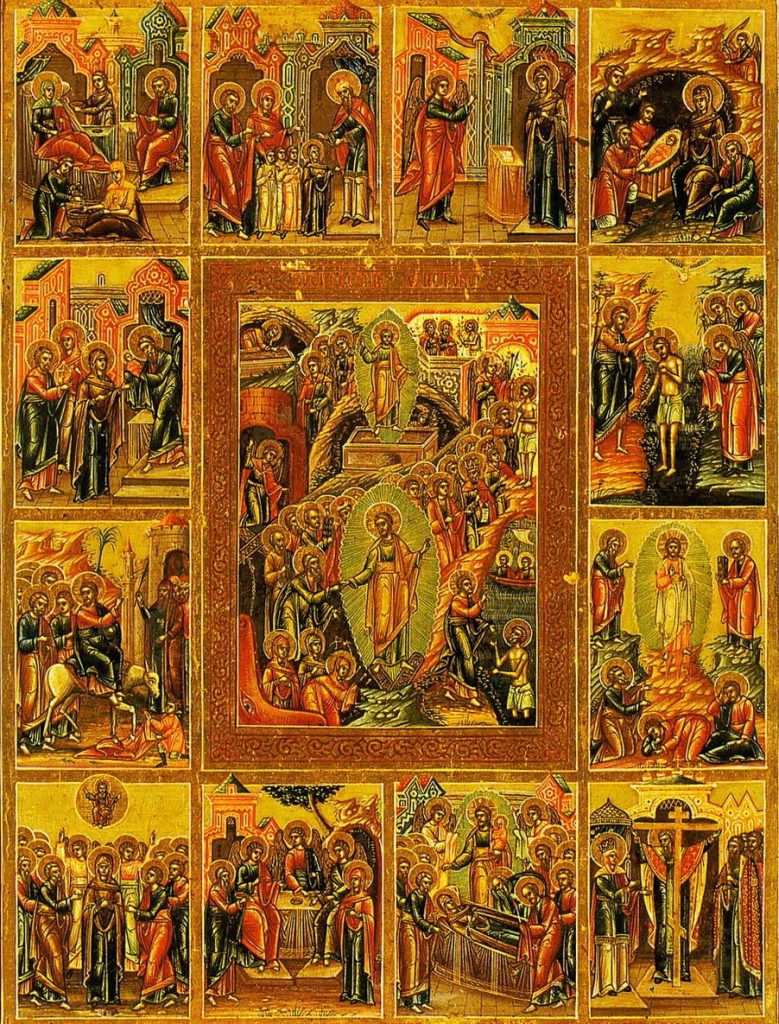


Isn’t veneration of icons idolatry?
We believe that worship and adoration (latria in Greek) is due to God alone. The Seventh Ecumenical Council taught us that, because God became man, we could represent Christ in images since it is his humanity that is depicted and rightly show honor and respect to Him through his image. In a similar fashion, we are allowed to represent and honor holy people with icons.
St. John of Damascus writes, “I venerate the icon of Christ the incarnate God … because the honor that we render unto the image belongs to the Prototype.” (Ukrainian Catechism section 591). We do not offer any sacrifices to icons, so we cannot say that venerating icons is latria (worship due to God alone), and therefore it is not idolatry.
Why do you call your clerics “father?”
Many Protestants claim that when Catholics address priests or deacons (as in the East) as “father,” they are engaging in an unbiblical practice that Jesus forbade: “Call no man your father on earth, for you have one Father, who is in heaven” (Matt. 23:9). Unfortunately, this is simply a misunderstanding of Matthew; what is being referred to here is that no one should violate the first commandment and succumb to worshiping false gods. We must be careful not to take the Biblical text out of context, otherwise we become armed with pretexts that sow division rather than peace.
The New Testament is filled with examples of and references to spiritual father-son and father-child relationships. Paul regularly referred to Timothy as his child: “Therefore I sent to you Timothy, my beloved and faithful child in the Lord, to remind you of my ways in Christ” (1 Cor. 4:17); “To Timothy, my true child in the faith: grace, mercy, and peace from God the Father and Christ Jesus our Lord” (1 Tim. 1:2); “To Timothy, my beloved child: Grace, mercy, and peace from God the Father and Christ Jesus our Lord” (2 Tim. 1:2). He also referred to Timothy as his son: “This charge I commit to you, Timothy, my son, in accordance with the prophetic utterances which pointed to you, that inspired by them you may wage the good warfare” (1 Tim 1:18); “You then, my son, be strong in the grace that is in Christ Jesus” (2 Tim. 2:1); “But Timothy’s worth you know, how as a son with a father he has served with me in the gospel” (Phil. 2:22). Paul also referred to other of his converts in this way: “To Titus, my true child in a common faith: grace and peace from God the Father and Christ Jesus our Savior” (Titus 1:4); “I appeal to you for my child, Onesimus, whose father I have become in my imprisonment” (Philem. 10). None of these men were Paul’s literal sons. Rather, Paul is emphasizing his spiritual fatherhood with them. Perhaps the most pointed New Testament reference to the theology of the spiritual fatherhood of clergy is Paul’s statement, “I do not write this to make you ashamed, but to admonish you as my beloved children. For though you have countless guides in Christ, you do not have many fathers. For I became your father in Christ Jesus through the gospel” (1 Cor. 4:14–15).
Peter followed the same custom, referring to Mark as his son: “She who is at Babylon, who is likewise chosen, sends you greetings; and so does my son Mark” (1 Pet. 5:13). The apostles sometimes referred to entire churches under their care as their children. Paul writes, “Here for the third time I am ready to come to you. And I will not be a burden, for I seek not what is yours but you; for children ought not to lay up for their parents, but parents for their children” (2 Cor. 12:14); and, “My little children, with whom I am again in travail until Christ be formed in you!” (Gal. 4:19).
John said, “My little children, I am writing this to you so that you may not sin; but if any one does sin, we have an advocate with the Father, Jesus Christ the righteous” (1 John 2:1); “No greater joy can I have than this, to hear that my children follow the truth” (3 John 4). In fact, John also addresses men in his congregations as “fathers” (1 John 2:13–14).
By referring to these people as their spiritual sons and spiritual children, Peter, Paul, and John imply their roles as spiritual fathers. Since the Bible frequently speaks of this spiritual fatherhood, we Catholics acknowledge it and follow the custom of the apostles by calling clergy “father.” Failure to acknowledge this is a failure to recognize and honor a great gift God has bestowed on the Church: the spiritual fatherhood of that the bishops, presbyters, and deacons embrace as the spiritual leadership of the community.
Why are Deacons addressed as “Father” (or Father-Deacon) in the Byzantine Churches?
In the East, spiritual fatherhood in the diaconate has Divine, Celestial, Moral, and Ecclesiastical underpinnings shared by all clergy in major orders. Regarding the deacon, being In Persona Christi (in the person of Christ) as the servant (In Persona Christi Servi) of the local community. The spiritual fatherhood of the deacon is rooted in the Christological image he reflects as his primary charism (Christ came to serve, not to be served – Matthew 20.28, Mark 10.45). Deacons are also in the image of the Holy Angels as guardians (of the Gospel), intermediaries (for Christ and the Bishop), and mediators (angels) for the people in the Divine Liturgy. The office of the deacon also finds its roots in the Old Testament in the Levitical Priesthood, as well as in the New Testament in its connection to the Holy Apostles and their successors. Regarding the latter, the deacon is not an optional office nor an ornamental figure, as it has often been conveyed in the modern era. St. Ignatius notes “it is for the rest of you to hold the deacon in as great respect as Jesus Christ; just as you should also look to the bishop as a type of the Father, and the presbyters as the apostolic circle forming his council, for without these three orders no church has any right to the name.” The conferral of Holy Orders is not only sacramental, but also a public permanent sign and conduit of the Lord’s work in his Church through his minister who operates in Christ and through the Spirit in a way specific to his office (bishop, presbyter, or deacon). The ordained deacon proceeds from the father bishop by the power of the Spirit as an icon and representative of Christ, as well as an instrument of his body – the Church, whose primary mission in the world is service (diakonia). This shared supernatural paternity is by grace, through ordination, and validated by Christ in communion with the father-bishop. In ordination, the deacon embraces part of the office of the bishop in communion with the presbyters, both of whom are an extension of the bishop’s spiritual fatherhood. This makes both the presbyter and deacon an extension of the bishop’s spiritual fatherhood to the people, albeit expressed in different ways in office and state of life. This serves as the vehicle by which the deacon exercises his trifold ministry in liturgy, preaching, and charity to the people of God. Where the liturgy is needed, the deacon must be there; where preaching is needed, the deacon must be there; where charity is needed, the deacon must be there in his spiritual fatherhood and authority given in Christ and by the bishop on behalf of the Church. In essence, the deacon is understood as service made sacramental to the world, and this is the root of his spiritual fatherhood and why he is addressed as “father.”
Why do Byzantine Deacons look so different than Roman Catholic Deacons?
This is often a question that arises with Roman Catholics, as the Roman Catholic diaconate tends to have an older average age and tends to be inconsistently seen in liturgy and preaching. Roman’s also address deacons as “deacon,” may or may not wear a collar, and are often called “permanent” or “transitional” deacons – even though they hold the same office. Byzantine faithful address Deacons as “father” or “father deacon,” typically wear a cassock, and do not make a distinction between permanent or transitional discernments.
You have Married Presbyters (Priests) – I thought Catholic priests had to be celibate?
Roman Catholic priests typically are celibate, but that is not the case for many of the Eastern Catholic Churches, particularly the Byzantine Ritual Churches. We may have our married men become ordained to the presbyterate or diaconate, but once a man is ordained to the diaconate or priesthood, he may no longer marry afterwards. Our bishops are celibate just like Roman Catholic bishops. Clerical celibacy, as it is diversely practiced in the different Churches, is a discipline and not a doctrine.
Don’t Catholics believe faith and works are the key to salvation rather than faith alone?
“Protestants believe in faith alone, while Catholics believe in faith and works.” You hear both Protestants and Catholics say this all the time. This is a tragically misleading oversimplification! If you tell a typical Evangelical, “You believe in faith alone, but we Catholics believe in faith and works,” you will cause him to think that the Catholic Church teaches something that, in fact, it says is false.
The discussion of faith and works doesn’t take place in a vacuum. It occurs in a specific context—the doctrine of justification. The New Testament uses the word justification to refer to one of the things that God does for us by his grace. Unfortunately, there is considerable disagreement about what justification involves.
The way typical American Evangelicals use the term, when God justifies someone, he declares that person’s sins forgiven and proclaims the person righteous. This occurs at the beginning of the Christian life, when a person first turns to God.
As far as it goes, this description is accurate. Catholic theology would say that there is more to justification than that, but it is true that at the beginning of the Christian life God forgives a person’s sins and declares him righteous.
When Protestants use the phrase “faith alone,” they are describing how we are justified. The Reformer idea is that to come to God, be forgiven, and be declared righteous, you don’t need to do anything to “earn” your place before God except have faith in Jesus Christ. In practice, Protestants give different and diverse meanings to the “faith alone” formula. Lutherans, for example, don’t see the idea that baptism grants salvation as conflicting with this. In his Small Catechism, Martin Luther asks, “What does baptism give? What good is it?” His answer: “It gives the forgiveness of sins, redeems from death and the devil, gives eternal salvation to all who believe this, just as God’s words and promises declare.” Various Protestants—including some Calvinists, Anglicans, Methodists, and others—believe baptism plays a role in salvation, but others sharply disagree. Some claim that if baptism were to play a role in salvation, it would violate the “faith alone” formula. They understand this formula in a way that excludes baptism. This is the most common position in American Evangelicalism (as a general simplification).
Regardless of how they interpret the “faith alone” formula, there is one thing that Protestants agree would violate this formula: works. “Works”—whatever they may be—are precisely the thing that the “faith alone” formula is meant to exclude. Much can be said about what “works” are in the Bible, but, for reasons of space, we won’t be going into that here. It will do for our purposes to note that most Evangelicals understand the term to mean “good works” (feeding the hungry, clothing the naked, etc.). Some understand it even more broadly to mean anything that you do. Both Reform groups commonly envision works as somehow earning our place before God. In this context, if a Catholic tells a Protestant the common one-liner, “We believe in justification by faith and works,” it will cause the Protestant to believe something about Catholic doctrine that is not true. Remember: Protestants use the term justification to refer to an event at the beginning of the Christian life where God forgives us and declares us righteous. As a result, a Protestant will think that the Catholic is saying that we need to do works to come to God and be forgiven. This will confirm his biases against the Church and play into all those stereotypes left over from the Reformation—the ones where Catholics are depicted as holding a false gospel according to which we need to earn our place before God by our own efforts – But the Catholic Church does not teach this!
Following the Protestant Reformation, the Catholic Church held an ecumenical council in the Italian city of Trent to deal with the theological questions that were being debated; Ecumenical Councils, for the most part, are called to provide further clarity on an already existing position, but elevates it to a more explicit doctrinal status to avoid any further confusion. The Council of Trent issued the Decree on Justification (DJ), which set forth the Catholic position on the subject. When we read what Trent says, we find it actually denies much of what is attributed to it. This is the case with the Reform objections/accusations that we need to earn our place before God by doing works, particularly at the beginning of the Christian life, when we are first justified. According to Trent, “none of those things that precede justification, whether faith or works, merit the grace of justification. ‘For, if by grace, it is not now by works, otherwise,’ as the Apostle says, ‘grace is no more grace’” (DJ 8, quoting Rom. 11:6). That is to say, when we come to God and are justified, it happens without any merit on our part. Neither our faith nor our works—nor anything else—merits justification. Trent thus denies the very thing our Protestant brethren fear it asserts, yet both Reforms and Catholics alike simply confuse one another by overly simplified responses that lack any doctrinal context.
What about James 2:24?
An uninformed Catholic might refer to the letter of James, demanding how the magisterium handles James 2:24, which says that we are “justified by works and not by faith alone.” In popular discussions, this verse is often presented to Protestants as if it “proves” that we are justified by faith and works, with nothing more to be said. Confronted with this claim, the Protestant may respond, “But that’s not the kind of justification that James is talking about.” Before dismissing this claim, a Catholic should be aware of one thing: The magisterium agrees with it! At least, the magisterium doesn’t quote James 2:24 in connection with the justification that occurs at the beginning of the Christian life. Instead, it refers to something else. Earlier, we mentioned that Protestants tend to conceive of justification as an event that occurs at the beginning of the Christian life, where we are forgiven and declared righteous by God, and we said that this understanding is true as far as it goes. However, in the Catholic view, there is (always) more to justification than this. In the first place, God doesn’t simply declare us righteous. He also makes us righteous in justification. Thus, the Council of Trent defined justification as “not only a remission of sins but also the sanctification and renewal of the inner man” (DJ 7). At the beginning of the Christian life, God forgives our sins and gives us the gift of righteousness. But he’s not done with us! He wants us to grow in righteousness (Theosis) throughout the Christian life, and if we cooperate with his grace, we can hope to one day be welcomed into the Heavenly Kingdom! Catholic theology refers to this growth in righteousness using the term justification, so, in Catholic language, justification isn’t something that happens just at the beginning of the Christian life, it happens at the beginning AND it happens over the course of the Christian life. Therefore, “works” is part of the Catholic definition of Justification, but not the Reformer’s definition. In a nutshell, making overly simplified accusations is not even operating with the same overall definition on both sides of the debate!
The reason the Church refers to this growth in righteousness as a form of justification is a little unclear in English. This is because the English vocabulary draws on both German and Latin roots. As a result, the same underlying concept can appear under more than one English term. Ah, the tower of Babel strikes again! How many issues between East and West, Catholic and Protestant, would be reconciled with proper linguistic context.
That’s the case with righteousness and justice. They are two different words in English, but they both represent the same underlying term in Latin, Greek, Hebrew, etc. As a result, you sometimes see Catholic works in English translated so that they speak of God giving us the gift of “justice” (i.e., righteousness), of us growing in justice, and thus of us being further justified. This sounds unusual in English, and both Protestant and Catholic scholars have lamented that we don’t have the vocabulary to say things like “God gives us the gift of righteousness, we grow in righteousness, and thus we are further deified through justification. As a result, we have to keep in mind the way that righteousness and justification are related.
This leads us to what the Council of Trent had to say about James 2:24. After discussing the justification that occurs at the beginning of the Christian life, Trent quotes several passages from St. Paul on how Christians grow in virtue by yielding our bodies to righteousness for sanctification. It states that by good works we “increase in that justice received through the grace of Christ and are further justified” (DJ 10). It is in the context of this growth in righteousness—and in this context only—that Trent quotes James 2:24: “Do you see that by works a man is justified, and not by faith only?” Trent thus relates James’s statement not to the initial justification that occurs when we first come to God but to the growth in righteousness that occurs over the course of the Christian life. Thus, a Protestant objecting that James is talking about a different kind of justification than the one the Protestant has in mind would be correct. James isn’t saying that you need to do good works in order to be forgiven. And neither is the Catholic Church!!!
If this were explained to many Protestants, they would likely be somewhat relieved and somewhat perplexed. They would be relieved to hear that the Catholic Church doesn’t teach that we need to do good works to come to God and be justified, and they would be relieved to hear that the Catholic Church relates James 2:24 to later events in the Christian life. On the other hand, they’d likely still have some differences, at least on the level of terminology. Though Protestants acknowledge that God sanctifies and renews the inner man when one is initially justified, they don’t tend to include this under the term justification. Instead, they treat it as a separate but simultaneous event. Although they acknowledge that by cooperating with God’s grace and doing good works we grow in righteousness as Christians, they don’t use the term justification for this process, either.
An open-minded Protestant might say, “Well, we don’t use the term justification that way, and we might not agree about the interpretation of particular verses, but we can acknowledge that what Catholics are saying here is true, even if they express it differently.”
Still, such a well informed Protestant might wonder how far we can agree. He might ask: “Didn’t Trent condemn ‘faith alone’ with an anathema?” Canon 9 from Trent’s Decree on Justification states: “If anyone says that the sinner is justified by faith alone, so that he understands that nothing else is required to cooperate in order to obtain the grace of justification, and that it is not in any way necessary that he be prepared and disposed by the action of his own will, let him be anathema.” This is widely misunderstood. One reason is that the term anathema is often glossed in Protestant circles to mean something like “damned by God,” and the canon is represented as condemning Protestants to hell. It isn’t. At that time in history, the term anathema referred to a form of excommunication that could be imposed by a Church court for certain serious offenses. It was performed with a special ceremony, and its purpose was to motivate people to repent. When they did repent, it was also lifted with a special ceremony. It was seldom imposed and was eventually abolished. The anathema did not sentence people to hell, it did not take effect automatically, it was never applied to all Protestants as a group, and it doesn’t apply to anyone today. The use of the term does, though, imply an authoritative rejection of the “faith alone” formula—when it is used to mean a specific thing. The canon doesn’t say, “If anyone says that the sinner is justified by faith alone, let him be anathema.” Instead, it rejects a particular use of the formula, whereby someone “understands that nothing else is required to cooperate in order to obtain the grace of justification, and that it is not in any way necessary that he be prepared and disposed by the action of his own will.” That is to say, you cannot “be saved,” and go out living an aberrant explicitly sinful life and expect to be in the life of grace – as if God simply demands nothing more. While most Protestants would agree, some sects of Protestantism believe just that. Trent is therefore concerned to reject “faith alone” when it’s used to say that you don’t need to in any way cooperate with God’s grace, that a merely intellectual faith would save you; Merely agreeing with the truths of the theology is not enough to be saved. As James puts it: “You believe that God is one; you do well. Even the demons believe—and shudder” (James 2:17). If one has faith combined with charity, then one has “faith working through love,” which is what Paul says counts in Christ (Gal. 5:6). That kind of faith, which Catholic theologians refer to as “faith formed by charity,” would—of itself—unite one to God spiritually. This understanding has been endorsed by the papal magisterium. Pope Benedict XVI taught: “Luther’s phrase ‘faith alone’ is true, if it is not opposed to faith in charity, in love. Faith is looking at Christ, entrusting oneself to Christ, being united to Christ, conformed to Christ, to his life. And the form, the life of Christ, is love; hence to believe is to conform to Christ and to enter into his love. So it is that in the Letter to the Galatians in which he primarily developed his teaching on justification St. Paul speaks of faith that works through love” (General Audience, Nov. 19, 2008).
It thus seems that the “faith alone” formula can have an acceptable meaning. Does this mean that Catholics should start using it? First, the formula is not the language that Scripture uses to describe how we are justified. The phrase “by faith alone” (Greek, ek pisteos monon) appears only once in the New Testament, in James 2:24, where it is rejected. Using this formula, whatever meaning it is given, creates an automatic tension with the language that Scripture itself uses, and that’s bound to cause confusion. Second, the formula is inherently open to confusion. In common speech, the term faith is a synonym for belief. When coupled with the word alone and used to describe the method of our justification, it communicates to most people the erroneous idea that we can be saved by intellectual belief alone—the view that Trent rejected. Third, though there are precedents for its use in Catholic history, it is not the primary or even a common way that Catholic theology expresses itself on justification. Fourth, the magisterium does not use the expression on a regular basis. If you look in the Catechism of the Catholic Church, you will not find it. Neither will you find it used regularly in other magisterial documents. There are a handful of such documents that acknowledge that the formula can have a Catholic sense, but there are none that use it regularly or recommend that Catholics use it.
There are many points on which Catholic and Protestant thought differs, including on the subject of justification, but we should be precise about these and not create additional confusion. A careful look shows that it is problematic to frame the Protestant-Catholic discussion of justification simply in terms of “faith alone” versus “faith and works.” This is an oversimplification that will lead Protestants to think that the Catholic Church teaches things that it does not. The way that the Church approaches the issue is more careful and more sophisticated. Communicating it is therefore more difficult. It’s always easier to reduce two positions to a pair of slogans and pit them against each other, but the Church doesn’t call us to do what’s rhetorically easy. It calls us to speak the truth in love (Eph. 4:15), and that means taking the care to explain what the Church teaches with both accuracy and charity.
Source: Quoted and Paraphrased from the work by Jimmy Akin, 2015, for Catholic Answers Magazine
I’m a Calvinist – Why does the Catholic Church not agree with Calvin’s TULIP formula?
Jimmy Akin offers a digestible understanding of Calvin’s TULIP teaching here, and how it relates to Catholic teaching.
The Western Church has many “spiritual texts,” does the Eastern Church?
Yes, we have a plethora of great texts, but perhaps the most widely used is called the Philokalia (full text located in Philokalia), a collection of the great spiritual wisdom of the East.